
Contents
- 1 Bijasan Mata Temple: A Comprehensive Pilgrimage Guide to Indore’s Sacred Hill
Bijasan Mata Temple: A Comprehensive Pilgrimage Guide to Indore’s Sacred Hill
Introduction & Spiritual Essence
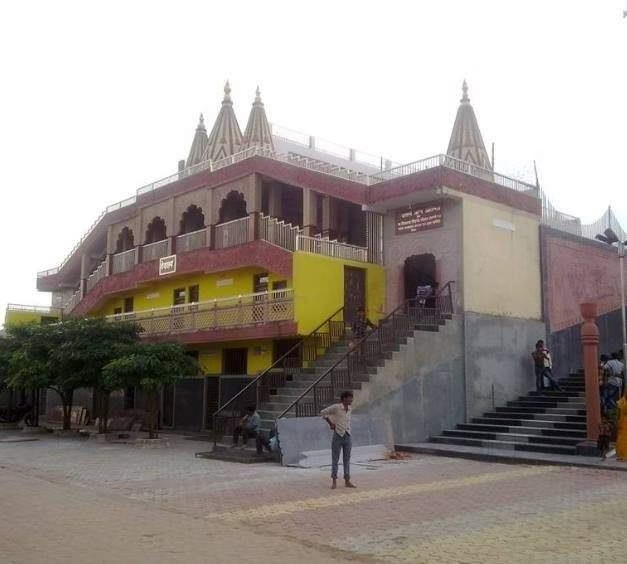
Bijasan Mata Temple, nestled atop a scenic hillock (tekri) in the Devi Ahilyabai Holkar Airport Area of Indore, is one of the most revered spiritual destinations in Central India. Dedicated to Mata Bijasan (an embodiment of Goddess Durga), this temple is a beacon of faith for devotees across the country.
The Divine Form: Kuladevi and Swayambhu Energy
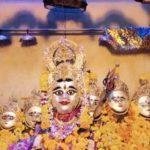
The presiding deity here is worshipped as Kuladevi (Ancestral Goddess) of the Hindu Gadariya community, specifically the Kukroliya Parivar. Unlike complex sculpted deities often found in ancient temples, the idol of Bijasan Mata is believed to be a manifestation of power residing on ordinary soil and rock. The term “Bijasan” itself is derived from Bija (Seed) and Asan (Seat), signifying the seed of creation and power.
Phalaśruti: Why Devotees Visit
Devotees flock to Bijasan Mata for specific spiritual benefits:
- Removal of Barriers: The Mother is believed to remove obstacles in marriage and childbirth.
- Ancestral Karmic Cleansing: As the Kuladevi, rituals performed here are believed to cleanse ancestral lineage (Pitra Dosh).
- Victory over Enemies: Local legends cite that even the great king Alaydhal (of the nearby Mandu region) sought the Mother’s mantra for victory.
Mothers (particularly Navyagal mothers) visit from across India after marriage to seek blessings for the well-being of their families.
Historical Origins & Scriptural Legend
The Holkar Legacy (Early 20th Century)
While the roots of the shrine are ancient, the current structure has a distinct history tied to the Holkar Dynasty. The temple was officially built in 1920 under the patronage of the Holkar rulers of Indore. Originally, the hilltop served as a guest house for the royal family, remnants of which can still be felt in the surrounding architecture, now home to the Border Security Force (BSF) Arms Museum.
The Sthala Purana (Local Legend)
According to local oral tradition, the location is steeped in divine energy. Tradition holds that the site was chosen because of a natural magnetic energy field—a “tekri” (hill) that projects upward toward the sky. The legend of King Alaydhal is central to the temple’s lore. It is said that the King of Mandu, unable to conquer his enemies through conventional means, performed intense penance here. The Mother appeared, granting him a powerful mantra that led to his victory.
According to temple records and local history, the Holkar dynasty recognized this spiritual potency and established the temple structure, ensuring the area was preserved for worship.
Architectural Marvels
Hilltop Vastu and Layout
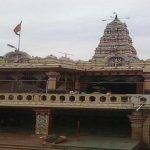
The temple exemplifies a blend of traditional Dravida stylistic elements adapted for a hilltop setting. The Vastu Shastra of the temple is unique; the path to the sanctum requires an ascent, symbolizing the spiritual climb from the material world to the divine.
Notable Features
- The Sanctum (Garbhagriha): The inner sanctum houses the deity on natural soil, maintaining the “Bhumi Devi” connection.
- Viewing Decks: The temple complex offers magnificent panoramic views of Indore. The sunset view from the temple precincts is considered a visual darshan of the highest order.
- Beautification Projects: The Madhya Pradesh government and Indore Municipal Corporation have undertaken beautification drives around the temple, including the development of gardens and a small lake at the foothills to enhance the pilgrim experience.
While the temple is not a listed UNESCO or ASI protected monument, it is a Grade-A heritage site of cultural significance to Indore.
Darshan & Ritual Logistics
Visitors are advised to check the 2026 calendar for specific festival timings, as schedules change during Navratri.
Daily Darshan Timings (Approximate)
| Session | Timing | Description |
|---|---|---|
| Morning Darshan | 06:00 AM – 12:00 PM | Early morning Aarti and general darshan. |
| Afternoon Break | 12:00 PM – 04:00 PM | Sanctum cleaning and preparation for evening rituals. |
| Evening Darshan | 04:00 PM – 09:00 PM | Sandhya Aarti and sunset viewing. |
Key Sevas & Offerings
- Navratri Special Pooja: Held twice a year (Chaitra and Sharad Navratri). In 2026, Chaitra Navratri will commence in late March/early April, and Sharad Navratri in October.
- Abhishekam: Ritual bathing of the deity (usually performed by priests).
- Archana: Individual name chanting services.
Online Seva Booking
Currently, the Indore Municipal Corporation (IMC) and local priest committees are digitizing offerings. For the most accurate online seva booking for Bijasan Mata in 2026, devotees should monitor the official Indore district temple portal or the Indore Smart City website under the religious category. During Navratri, online passes may be required for entry to manage crowds.
Practical Visitor Guidance
Dress Code & Etiquette
As with all Hindu temples, modest clothing is mandatory. Traditional Indian attire (Saree, Kurta-Pajama) is preferred. Avoid shorts or sleeveless tops.
Photography & Security
- Photography: Restricted inside the inner sanctum (Garbhagriha). Photography is generally allowed in the outer premises and viewing areas.
- Mobile Lockers: While the temple trust may provide basic storage, it is advisable to travel light. However, the nearby BSF Arms Museum has strict security protocols; visitors should check rules regarding electronic devices before visiting the museum complex adjacent to the temple.
Crowd Management & Best Time to Visit
- Best Hours: Weekday mornings (6:00 AM – 8:00 AM) offer the most peaceful darshan.
- Seasonal Advice: Indore summers (April–June) are hot. Carry water and sun protection. The hilltop location offers breeze but direct sun exposure is intense.
- Navratri Peak: During Sharad Navratri, footfall can exceed 1–2 lakh devotees per day. Local administration sets up barricades and one-way traffic systems.
Pilgrimage Connectivity
How to Reach Bijasan Mata Temple
The temple is located in the Devi Ahilyabai Holkar Airport Area (formerly known as Rajendra Nagar).
- By Air: The temple is only 5–7 km (approx. 15 mins) from Devi Ahilyabai Holkar Airport (IDR). The road leading directly to the temple is well-maintained.
- By Rail: From Indore Junction Railway Station, it is approximately 9.8 km. Travel time is about 25–30 minutes via MR-10 Road or Airport Road.
- By Road: The temple is well connected via NH-52 and internal city ring roads. Auto-rickshaws, cabs (Ola/Uber), and city buses (BRTS) are readily available.
Nearby Sacred Sites (Pilgrimage Circuit)
- Annapurna Temple: Located roughly 12 km away, this temple is dedicated to the Goddess of food and nourishment and features beautiful South Indian architectural style.
- Kanch Mandir (Glass Temple): A Jain temple located in the heart of Indore (approx. 10 km), famous for its intricate glass mosaics and mirror work.
- Khajrana Ganesh Temple: A highly significant Ganesh shrine located about 8 km from Bijasan Mata, built by Queen Ahilyabai Holkar.
Frequently Asked Questions (FAQ)
1. Is there a VIP darshan entry available?
During normal days, general darshan is swift. However, during Navratri, the administration may provide separate queues for senior citizens and differently-abled devotees. For specific VIP entry, one should contact the Indore Municipal Corporation office managing the temple trust.
2. What is the significance of the ‘Tekri’ (Hill) here?
The hill represents a natural elevation that brings the devotee physically closer to the heavens. It is also believed that the hill contains specific geological energies that the Goddess inhabits.
3. Are there accommodation facilities at the temple?
The temple itself does not have a dedicated guest house for overnight stays, but being in Indore city, there are numerous hotels and Dharamshalas within a 5-10 km radius. The BSF complex nearby is restricted to military personnel.
4. What is the history of the BSF Arms Museum here?
The museum is located in the converted guest house of the Holkars. It showcases the history of the Border Security Force and is adjacent to the temple grounds, offering a historical complement to the spiritual visit.
5. Is non-vegetarian food allowed near the temple?
No. Being a strictly vegetarian temple of the Goddess, the premises and surrounding immediate area are alcohol and meat-free. Pure vegetarian Prasad is available in stalls outside.
Photo Gallery

Recent Posts

Shri Kaamkoteeshwar Mandir, Varanasi – History & Significance
In the heart of Kashi, the eternal city of Lord Shiva, where the Ganges flows with celestial grace, stands the Shri Kaamkoteeshwar Mandir. This sacred Sannidhi is not merely a temple but a profound spiritual bridge between the Northern…

ओ सांवरे तूने ही मुझको संभाला – Lyrics & Meaning
ओ सांवरे तूने ही मुझको संभाला – A Prayer to Shyam Origin & Spiritual Essence Why This Bhajan Resonates Devotees chant this when overwhelmed by life’s storms—the refrain ‘तूने ही मुझको संभाला’ is the soul’s sigh of relief: “You…

कथा ये है महाराज मेरे की – Lyrics & Meaning
कथा ये है महाराज मेरे की छत्रपति संभाजी महाराज – A Prayer to Chhatrapati Sambhaji Maharaj Origin & Spiritual Essence Why This Bhajan Resonates Devotees chant this when their spirit feels tested—its powerful refrain “महाराज मेरे” is a soul’s…

Rigveda Samhita Yathartha Anuvada (ऋग्वेद संहिता यथार्थ अनुवाद) – Complete Set with Anvayartha & Hindi/English Translation
The Rigveda is the oldest surviving scripture of humanity and the foundational text of Sanātana Dharma. For serious students, scholars, UPSC aspirants studying ancient Indian history, Sanskrit learners, and spiritual seekers, a precise and grammatically structured translation is indispensable.…

आना भी अकेला है जाना भी अकेला है – Lyrics & Meaning | BharatTemples
आना भी अकेला है जाना भी अकेला है – A Prayer to the Divine Witness Origin & Spiritual Essence Why This Bhajan Resonates Devotees turn to this bhajan in moments of deep reflection—when life’s attachments begin to ache. The…

माता शेरावाली के द्वार जो भी जाता है – Lyrics & Meaning
माता शेरावाली के द्वार जो भी जाता है – A Prayer to Maa Sherawali Origin & Spiritual Essence Why This Bhajan Resonates Devotees turn to this bhajan in times of fear or uncertainty—its promise that no one leaves Maa’s…

मार लेना सपणी उबार लेणा भवरा – Lyrics & Meaning
मार लेना सपणी उबार लेणा भवरा – A Prayer to the Divine Beloved Origin & Spiritual Essence Why This Bhajan Resonates Devotees chant this in moments of deep vulnerability—its cry of “मार लेना सपणी, उबार लेणा भवरा” is the…

हमें श्याम सुंदर भरोसा तुम्हारा – Lyrics & Meaning
हमें श्याम सुंदर भरोसा तुम्हारा – A Prayer to Shyam Sundar Origin & Spiritual Essence Why This Bhajan Resonates Devotees chant this when feeling alone—its refrain ‘de do sahara’ is the soul’s cry for divine support. Lyrics in Hindi…

Mere Satguru Ne Di Thi Davai Lyrics in Hindi & Meaning
Mere Satguru Ne Di Thi Davai: Invoking the Guru’s Liberating Wisdom This soul-stirring bhajan venerates the Satguru (True Spiritual Master) as the divine physician who dispenses the only remedy for life’s deepest sufferings. Composed by Sant Karmaveer Tufani, it…

Janm Diyo Thari Maa Dukh Dekhiyo Lyrics in Hindi & Meaning
जन्म दियो थारी माँ दुख देखियो (Maa’s Grief Upon Birthing You) This soul-stirring Chetavani Bhajan (admonitory hymn) is addressed to the Divine Mother (Maa) – a call for repentance when children forget their filial duties in the dark age…