
Contents
The Bhagavad Gita is one of the most important religious texts in Hinduism, and it is a conversation between Lord Krishna and Arjuna, one of the Pandavas. The book contains 18 chapters and over 700 verses, covering topics such as Dharma, Karma, and the nature of the Self. In this article, we will discuss chapter 4, verse 11 of the Bhagavad Gita and its significance.
In chapter 4, Lord Krishna reveals to Arjuna that the knowledge of the Self has been handed down through a long line of succession, and that he himself is part of that lineage. He explains that he has taken birth in different forms throughout history to protect the righteous and destroy the wicked.
Bhagavad Gita: Chapter 4, Verse 11
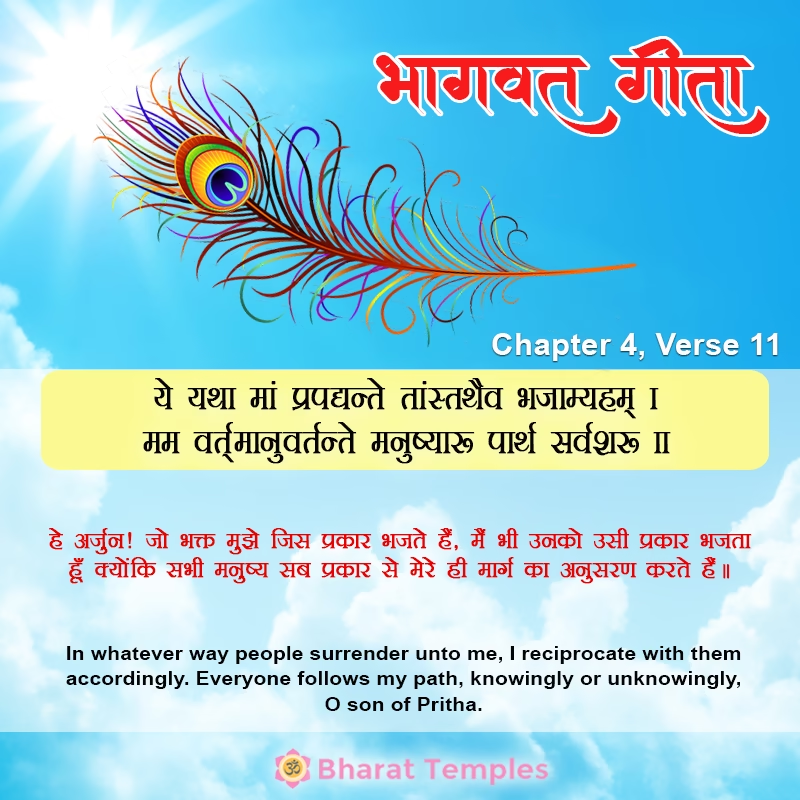
ये यथा मां प्रपद्यन्ते तांस्तथैव भजाम्यहम् |
मम वर्त्मानुवर्तन्ते मनुष्या: पार्थ सर्वश: || 11||
ye yathā māṁ prapadyante tāns tathaiva bhajāmyaham
mama vartmānuvartante manuṣhyāḥ pārtha sarvaśhaḥ
Audio
भावार्थ:
हे अर्जुन! जो भक्त मुझे जिस प्रकार भजते हैं, मैं भी उनको उसी प्रकार भजता हूँ क्योंकि सभी मनुष्य सब प्रकार से मेरे ही मार्ग का अनुसरण करते हैं॥11॥
Translation
In whatever way people surrender unto me, I reciprocate with them accordingly. Everyone follows my path, knowingly or unknowingly, O son of Pritha.
Explanation
This verse is an important reminder that all paths ultimately lead to the divine. Lord Krishna explains that people approach him in different ways, but he receives them all equally. This is a profound statement, as it shows that the divine is accessible to everyone, regardless of their background or beliefs.
Lord Krishna also emphasizes the idea that he is present in all beings and all things. This is reflected in the second part of the verse, which states that all human beings follow his path, whether they are aware of it or not. This suggests that the divine is not something separate from us, but rather a part of our very nature.
Significance
The significance of this verse lies in its message of inclusivity and universality. It reminds us that the divine is not confined to any one religion or belief system, but rather is present in all things. This is an important message, especially in a world where religious differences can often lead to conflict and division.
Furthermore, this verse emphasizes the importance of personal experience and direct connection with the divine. Lord Krishna does not prescribe a particular path or method of worship, but rather encourages individuals to approach him in whatever way feels most natural to them.
FAQs
Chapter 4, verse 11 of the Bhagavad Gita emphasizes the universality of the divine and the idea that all paths ultimately lead to the same goal.
The message of chapter 4, verse 11 of the Bhagavad Gita is that the divine is accessible to all and that individuals should find their own path to connect with the divine.
The Bhagavad Gita: Chapter IV
- Chapter 4, Verse 1
- Chapter 4, Verse 2
- Chapter 4, Verse 3
- Chapter 4, Verse 4
- Chapter 4, Verse 5
- Chapter 4, Verse 6
- Chapter 4, Verse 7
- Chapter 4, Verse 8
- Chapter 4, Verse 9
- Chapter 4, Verse 10
- Chapter 4, Verse 11
- Chapter 4, Verse 12
- Chapter 4, Verse 13
- Chapter 4, Verse 14
- Chapter 4, Verse 15
- Chapter 4, Verse 16
- Chapter 4, Verse 17
- Chapter 4, Verse 18
- Chapter 4, Verse 19
- Chapter 4, Verse 20
- Chapter 4, Verse 21
- Chapter 4, Verse 22
- Chapter 4, Verse 23
- Chapter 4, Verse 24
- Chapter 4, Verse 25
- Chapter 4, Verse 26
- Chapter 4, Verse 27
- Chapter 4, Verse 28
- Chapter 4, Verse 29
- Chapter 4, Verse 30
- Chapter 4, Verse 31
- Chapter 4, Verse 32
- Chapter 4, Verse 33
- Chapter 4, Verse 34
- Chapter 4, Verse 35
- Chapter 4, Verse 36
- Chapter 4, Verse 37
- Chapter 4, Verse 38
- Chapter 4, Verse 39
- Chapter 4, Verse 40
- Chapter 4, Verse 41
- Chapter 4, Verse 42
Recent Posts

ओ सांवरे तूने ही मुझको संभाला – Lyrics & Meaning
ओ सांवरे तूने ही मुझको संभाला – A Prayer to Shyam Origin & Spiritual Essence Why This Bhajan Resonates Devotees chant this when overwhelmed by life’s storms—the refrain ‘तूने ही मुझको संभाला’ is the soul’s sigh of relief: “You…

कथा ये है महाराज मेरे की – Lyrics & Meaning
कथा ये है महाराज मेरे की छत्रपति संभाजी महाराज – A Prayer to Chhatrapati Sambhaji Maharaj Origin & Spiritual Essence Why This Bhajan Resonates Devotees chant this when their spirit feels tested—its powerful refrain “महाराज मेरे” is a soul’s…

Rigveda Samhita Yathartha Anuvada (ऋग्वेद संहिता यथार्थ अनुवाद) – Complete Set with Anvayartha & Hindi/English Translation
The Rigveda is the oldest surviving scripture of humanity and the foundational text of Sanātana Dharma. For serious students, scholars, UPSC aspirants studying ancient Indian history, Sanskrit learners, and spiritual seekers, a precise and grammatically structured translation is indispensable.…

आना भी अकेला है जाना भी अकेला है – Lyrics & Meaning | BharatTemples
आना भी अकेला है जाना भी अकेला है – A Prayer to the Divine Witness Origin & Spiritual Essence Why This Bhajan Resonates Devotees turn to this bhajan in moments of deep reflection—when life’s attachments begin to ache. The…

माता शेरावाली के द्वार जो भी जाता है – Lyrics & Meaning
माता शेरावाली के द्वार जो भी जाता है – A Prayer to Maa Sherawali Origin & Spiritual Essence Why This Bhajan Resonates Devotees turn to this bhajan in times of fear or uncertainty—its promise that no one leaves Maa’s…

मार लेना सपणी उबार लेणा भवरा – Lyrics & Meaning
मार लेना सपणी उबार लेणा भवरा – A Prayer to the Divine Beloved Origin & Spiritual Essence Why This Bhajan Resonates Devotees chant this in moments of deep vulnerability—its cry of “मार लेना सपणी, उबार लेणा भवरा” is the…

हमें श्याम सुंदर भरोसा तुम्हारा – Lyrics & Meaning
हमें श्याम सुंदर भरोसा तुम्हारा – A Prayer to Shyam Sundar Origin & Spiritual Essence Why This Bhajan Resonates Devotees chant this when feeling alone—its refrain ‘de do sahara’ is the soul’s cry for divine support. Lyrics in Hindi…

Mere Satguru Ne Di Thi Davai Lyrics in Hindi & Meaning
Mere Satguru Ne Di Thi Davai: Invoking the Guru’s Liberating Wisdom This soul-stirring bhajan venerates the Satguru (True Spiritual Master) as the divine physician who dispenses the only remedy for life’s deepest sufferings. Composed by Sant Karmaveer Tufani, it…

Janm Diyo Thari Maa Dukh Dekhiyo Lyrics in Hindi & Meaning
जन्म दियो थारी माँ दुख देखियो (Maa’s Grief Upon Birthing You) This soul-stirring Chetavani Bhajan (admonitory hymn) is addressed to the Divine Mother (Maa) – a call for repentance when children forget their filial duties in the dark age…
Bhadi Sabha Mein Thane Manaun Lyrics in Hindi & Meaning
Bhadi Sabha Mein Thane Manaun: Invoking the Spear-Wielding Mother Mata Bhawani (श्री ज्वाला भवानी), the fiery manifestation of Shakti worshipped as the Protector of Dharma in Her Dhaulagarh sanctum. Origin & Spiritual Essence Composed in Rajasthani folk tradition by…