Bhooteshwar Temple Varanasi: History, Darshan Timings & Complete Guide
Receive daily temple updates, divine darshan, and morning bhajans directly on WhatsApp.
Contents
- 1 Bhooteshwar Temple, Varanasi: The Ancient Abode of Shani Dev
- 1.1 1. Introduction & Spiritual Essence
- 1.2 2. Historical Origins & Scriptural Legend
- 1.3 3. Architectural Marvels
- 1.4 4. Darshan & Ritual Logistics (2026 Update)
- 1.5 5. Practical Visitor Guidance
- 1.6 6. Pilgrimage Connectivity
- 1.7 7. Frequently Asked Questions (FAQ)
- 1.8 8. Photo Gallery
- 1.9 9. Location & Contact
Bhooteshwar Temple, Varanasi: The Ancient Abode of Shani Dev
The spiritual labyrinth of Varanasi (Kashi) holds countless secrets, and the Bhooteshwar Temple stands as a profound testament to the city’s ancient heritage. Located in the heart of Dasaswamedh, this temple is not merely a site of worship but a convergence of Kashi Khand legends and celestial energy. As we step into 2026, the temple continues to attract devotees seeking the blessings of Lord Shiva and the protective gaze of Shani Dev.
1. Introduction & Spiritual Essence
The Bhooteshwar Temple is dedicated to Bhooteshwar, a manifestation of Lord Shiva, and uniquely houses a sacred Shani Idol (Saturn). The name “Bhooteshwar” translates to “Lord of Ghosts and Elements,” signifying Shiva’s sovereignty over the unseen realms. According to local tradition and the Kashi Khand, this is one of the most powerful Shiv Lings installed by Lord Brahma himself.
Phalaśruti: The Spiritual Benefit
Why do devotees undertake this pilgrimage? The scriptures promise immense benefits:
- Removal of Ancestral Karma: It is believed that worshipping here helps resolve Pitru Dosha and pacifies troubled ancestral spirits.
- Protection from Evil: As the “Lord of Bhootas (Ghosts),” the deity protects devotees from negative energies and unseen fears.
- Wealth and Prosperity: The Kashi Khand explicitly states that devotees who worship the Bhooteshwar Ling are blessed with all sorts of wealth and prosperity.
- Shani Grace: The presence of the Shani idol helps mitigate the harsh effects of the Saturn transit (Sade Sati or Dhaiya), offering stability and career success.
📖 Related: Chitra Ghanta Devi Temple Varanasi: History, Darshan Timings & Guide
2. Historical Origins & Scriptural Legend
While specific structural dates are often lost in the annals of time due to the constant rebuilding of Varanasi, the theological origins are deeply rooted in scripture.
The Kashi Khand Narrative
According to the Kashi Khand of the Skanda Purana (Chapter 97), a fascinating dialogue took place between Lord Shiva and Goddess Parvati. On Parvati’s request, Shiva described the various deities, Shiv Lings, and Teerths (sacred ponds) spanning Kashi. It was during this revelation that the Bhooteshwar Ling was unveiled—a deity of immense power capable of bestowing boons.
Archaeological & Architectural History
The current temple structure reflects a harmonious blend of traditional North Indian temple architecture with Dravidian influences, likely renovated over the centuries by wealthy merchants and local patrons. The temple is located in the Bhooteshwar Gully, an area historically known for its dense network of shrines. Tradition holds that the original Lingam is a Swayambhu (self-manifested) form or was established in ancient times by sage rituals.
3. Architectural Marvels
The Bhooteshwar Temple offers a glimpse into the sacred geometry of Vastu Shastra. Though compact, the temple complex is designed to channel spiritual energy.
The Sanctum & The Shikhara
The shrine features a classic Shikhara (spire) typical of the Nagara style, pointing vertically toward the heavens. The sanctum (Garbhagriha) is dimly lit, enhancing the meditative atmosphere, allowing the devotee to focus entirely on the Shiv Ling.
The Shani Idol
A distinct feature of this temple is the dedicated shrine for Shani Dev. Unlike the typical depiction of Shani as a fearsome figure, the idol here is worshipped as a protective guardian of the temple premises. The placement follows Vastu principles to neutralize the malefic effects of the planet Saturn.
4. Darshan & Ritual Logistics (2026 Update)
To ensure a seamless pilgrimage experience, we have compiled the current timings and seva details for 2026. Please note that timings may vary slightly during festivals.
📖 Related: Eeshaneshwar Temple Varanasi: History, Darshan Timings & Guide
Daily Timings
| Darshan Session | Timing |
|---|---|
| Morning Opening | 05:00 AM |
| Morning Pooja | 05:30 AM – 12:00 PM |
| Mid-day Closure | 12:00 PM – 3:00 PM |
| Evening Opening | 03:00 PM |
| Night Closing | 10:00 PM (Post-Shayan Aarti) |
Sevas and Booking
While many rituals are conducted directly at the temple, certain Sevas can be coordinated. Note that due to the temple’s location in the narrow lanes of Dasaswamedh, large-scale public Abhishekams are limited, but personal offerings are accepted.
- Abhishekam: Sacred bathing of the Lingam (Milk, Honey, Ghee).
- Rudra Abhishekam: A powerful Vedic ritual for removal of obstacles.
- Shani Taila Abhishekam: Specific offering to Shani Dev using mustard oil.
Online Seva Booking: For major festivals or specific Pujas, devotees can check the Varanasi Temple Trust portal or the official Kashi Vishwanath Temple administration website, as many smaller shrines in the Kashi Vishwanath Corridor fall under the broader administrative umbrella.
2026 Major Festival Dates
| Festival | Date (2026) |
|---|---|
| Maha Shivaratri | February 26 |
| Shani Pradosh Vrat | May 23 & November 18 |
| Saturn Day (Saturday) | Every Saturday (Special Pujas) |
| Kartik Purnima | November 15 |
5. Practical Visitor Guidance
Visiting a temple in the old city of Varanasi requires preparation. Here are essential tips for a fulfilling visit.
Code of Conduct
- Dress Code: Traditional attire is recommended. Men should wear Dhoti or trousers with a shirt/t-shirt; women should wear Saree or Salwar Kameez. Avoid shorts and sleeveless tops.
- Photography: Photography inside the inner sanctum is strictly prohibited. You may photograph the exterior architecture and the Shani idol from a distance, but please respect the sanctity of the space.
- Mobile & Electronics: Silence your phones. Many temples in the lane have lockers, but it is advisable to carry minimal electronics to avoid management hassles in narrow lanes.
Accessibility & Crowd Management
- Footwear: There are designated shoe-keeping counters near the entrance of the Bhooteshwar Gully for a nominal fee.
- Best Hours to Visit: Early morning (5:30 AM – 7:00 AM) or late evening (8:00 PM onwards) to avoid peak crowds. Avoid weekends if possible, as the Dasaswamedh area gets crowded with tourists.
- Accessibility: The lanes are narrow and uneven. It is not wheelchair accessible. Sturdy footwear is required.
📖 Related: Satishwar Temple Varanasi: History, Darshan Timings & Complete Guide
6. Pilgrimage Connectivity
The temple is located in the Dasaswamedh area, the bustling heart of Varanasi.
How to Reach
- By Air: Lal Bahadur Shastri International Airport (LBS) is approximately 25 km away. Taxis are readily available.
- By Train: Varanasi Junction (BSB) is the closest major railway station (approx. 6 km). From there, take an auto-rickshaw to Dasaswamedh.
- By Road: The temple lies off the main Dasaswamedh Ghat road. Vehicle Access: Vehicles cannot enter the narrow Bhooteshwar Gully. Park at the designated Dasaswamedh parking area and walk 5 minutes.
Nearby Sacred Sites (Pilgrimage Circuit)
Plan your visit by combining these nearby shrines:
- Kashi Vishwanath Temple: The primary Jyotirlinga, just a 5-minute walk away.
- Dasaswamedh Ghat: The site of the grand Ganga Aarti every evening.
- Manikarnika Ghat: The sacred cremation ground, a profound reminder of the cycle of life and death.
7. Frequently Asked Questions (FAQ)
Is there a VIP Darshan entry at Bhooteshwar Temple?
No, Bhooteshwar Temple does not have a formal VIP entry system. The darshan is generally swift as it is a smaller shrine, but during festivals like Maha Shivaratri, all devotees wait in the common queue. Respectful conduct is the only “VIP pass” here.
What is the significance of the Shani Idol in Bhooteshwar Temple?
The Shani Idol is worshipped to ward off ill-luck caused by the planet Saturn. In this temple, Shani Dev is believed to guard the Bhooteshwar Lingam, making it a unique combination of Shiva’s power and Saturn’s justice.
Can I perform rituals for ancestors (Pind Daan) here?
While Bhooteshwar is excellent for resolving Pitru Dosha through Shiva worship, the primary site for Pind Daan in Varanasi is the Manikarnika Ghat. However, offering Deep Daan (lighting lamps) here is highly effective for ancestral peace.
Is there an entry fee?
No, entry is free for all devotees. Donations are accepted at the dedicated box near the exit.
Are non-Hindus allowed?
As is customary with most ancient Shiva temples in India, entry is traditionally restricted to Hindus. Please respect these religious sentiments.
8. Photo Gallery
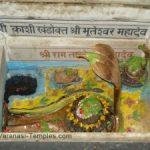
Bhooteshwar2-300×225, Bhooteshwar Temple, Varanasi
9. Location & Contact
The temple administration maintains a local presence for inquiries.
- Location: Bhooteshwar Gully, Dasaswamedh, Varanasi, Uttar Pradesh 221001.
- Contact: Local Pujari (Inquiries at the temple premises).