
Contents
- 1 Definitive Pilgrimage Guide: Dasaswamedheshwar Temple, Varanasi
Definitive Pilgrimage Guide: Dasaswamedheshwar Temple, Varanasi
Welcome to the ancient shores of Varanasi (Kashi), where the sacred Ganges flows and the spiritual atmosphere is palpable. As we approach 2026, the timeless significance of the Dasaswamedheshwar Temple remains a beacon for millions of devotees. This comprehensive guide, curated by the Heritage & SEO Team at bharattemples.com, is designed to align with modern search intents while honoring the sacred traditions of Sanatana Dharma.
Introduction & Spiritual Essence
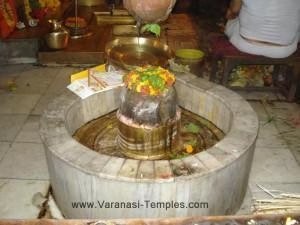
At the heart of Dasaswamedh Ghat stands a deity of immense scriptural power: Dasaswamedheshwar. This is not merely a temple, but a site of cosmic history. The presiding deity is a Swayambhu (self-manifested) Shiva Linga, worshipped as Lord Shiva in his form as the supreme consciousness of Kashi.
Devotees often refer to this temple by alternate names tied to its location, such as Dasaswamedheshwar Ghat Mandir or simply the Linga at Shitla Mandir.
Phalaśruti: The Spiritual Benefits
According to the Kashi Khand (Chapter 52) of the Skanda Purana, the spiritual benefits of visiting Dasaswamedheshwar are profound:
- Cleansing of Sins: A devotee who takes a holy dip at Dasaswamedh Ghat and offers prayers to Dasaswamedheshwar is absolved of all sins.
- Ancestral Liberation: Performing specific rituals on the first day after Amavasya (New Moon) in the month of Ashad grants the highest Punya (merit), washing away the accumulated sins of two generations of ancestors.
- Moksha (Liberation): Bathing in the Ghat and worshipping the Linga daily from the 1st to the 10th day after Amavasya every month ensures a blissful life and freedom from the cycle of rebirth.
Historical Origins & Scriptural Legend
The Legend of Brahma and Divodas
The temple’s origin is rooted in a fascinating cosmic narrative. Tradition holds that Lord Shiva, desiring to test the righteousness of King Divodas, sent Lord Brahma to create disturbances in the Holy City of Kashi.
Lord Brahma assumed the guise of an old Brahmin and approached King Divodas. Welcomed with honor, the King asked how he could serve the guest. The Brahmin requested the materials and arrangements to perform the Aswa Medha Yagna (Horse Sacrifice). With the King’s assistance, Lord Brahma performed not one, but ten such Yagnas. The location where these ten sacrifices were completed became known as Dasaswamedh Teerth (now Dasaswamedh Ghat), previously called Rudra Sarovar.
Following the Yagnas, Lord Brahma installed the Dasaswamedheshwar Linga. Despite his efforts, Lord Brahma could not find any fault with King Divodas, proving the King’s piety.
Historical Timeline
While the specific dynasty of the original construction is lost in the mists of antiquity, the temple has been renovated several times throughout history. The current structure reflects the resilience of Kashi’s spiritual architecture, maintaining the sanctity of the original Swayambhu Linga despite centuries of floods and invasions.
Architectural Marvels
Kashi Naad and Vastu Shastra
The Dasaswamedheshwar Temple is a classic example of the Nagara style of temple architecture, adapted to the unique geography of the riverbank. The layout is governed by Vastu Shastra, ensuring the flow of cosmic energy from the river Ganges directly to the sanctum.
Key Features
The temple complex, situated within the premises of the Shitla Mandir, features a tiered Shikhara (tower) that points towards the heavens, symbolizing the ascent of the soul. The sanctum sanctorum houses the Swayambhu Linga, adorned with fresh flowers and sacred threads. The Mandapa (hall) allows devotees to gather for rituals, offering an unobstructed view of the Ganges, the lifeblood of Kashi.
While the temple does not hold a UNESCO World Heritage status, it is a protected heritage site under the Varanasi Municipal Corporation and holds deep archaeological and spiritual value.
Darshan & Ritual Logistics
Planning your visit requires an understanding of the daily rhythms of worship. Below are the standard timings for 2026; however, timings may vary during festivals.
Daily Timings
| Session | Timing | Description |
|---|---|---|
| Morning Darshan | 05:00 AM – 12:00 PM | Best time for peaceful meditation and Abhishekam. |
| Evening Darshan | 04:00 PM – 10:00 PM | Includes Ganga Aarti viewing from the adjacent steps. |
Key Sevas & 2026 Festivals
Devotees can perform specific Sevas (services) to Lord Shiva. While many rituals are performed personally at the Ghat, formal bookings can be arranged through local Purohits.
- Abhishekam: Ritual bathing of the Linga (Milk, Honey, Ganga Jal).
- Archana: Offering of Bilva leaves and chanting of Shiva Mantras.
- Online Seva Booking: While the Dasaswamedh Ghat area is a public space, specialized rituals can be booked via the official Kashi Vishwanath Temple Trust portals or authorized local vendors.
Major 2026 Festivals at Dasaswamedh Ghat
- Shivratri: February 26, 2026. (Massive influx of pilgrims; advance accommodation is mandatory).
- Dev Deepawali: November 5, 2026. (The Ghat is illuminated with millions of earthen lamps).
- Kartik Purnima: November 15, 2026. (Holy bath and special Yagnas).
- Maha Shivratri Mela: February 26, 2026.
Practical Visitor Guidance
Code of Conduct
To maintain the sanctity of the temple and the Ghat:
- Dress Code: Traditional Indian attire (Dhoti, Kurta, Saree, or Salwar Kameez) is recommended. Western attire should be modest.
- Photography: Photography is strictly prohibited inside the sanctum sanctorum. Photography on the Ghat is allowed but respect the privacy of other devotees.
- Mobiles & Lockers: Keep phones on silent mode. Public lockers are available near the main ghat steps, but it is advisable to carry minimal valuables.
- Accessibility: The Ghat has many steps. For elderly pilgrims, wheelchair assistance is available on the main road level, and boat rides offer a direct route to the steps.
Crowd Management
Best Hours to Visit: 5:00 AM – 7:00 AM for a serene experience, or 8:00 PM – 10:00 PM for the spiritual atmosphere of the evening Aarti.
Seasonal Advice: Summer (April-June) is extremely hot; carry water and a head cover. Monsoon (July-September) brings high humidity but lush greenery. Winter (October-March) is the ideal season for pilgrimage.
Pilgrimage Connectivity
How to Reach
Dasaswamedh Ghat is centrally located in Varanasi.
- Nearest Airport: Lal Bahadur Shastri International Airport (LBS) (approx. 25 km). Taxis and e-rickshaws are readily available.
- Nearest Railway Station: Varanasi Junction (BSB) (approx. 6 km). Autos and cycle-rickshaws can take you directly to the Ghat entrance.
- Road Access: The Ghat is accessible via NH-19 and Mahmoorganj Road. Private vehicles must be parked in designated parking zones as the Ghat area is pedestrian-only.
Nearby Sacred Sites
Enhance your pilgrimage circuit by visiting these nearby spiritual landmarks:
- Kashi Vishwanath Temple (Jyotirlinga): Just a 10-minute walk from the Ghat.
- Annapurna Mata Temple: Located near Vishwanath Temple, dedicated to the Goddess of Food.
- Manikarnika Ghat: The site of the sacred fire cremation, representing the cycle of life and death.
Frequently Asked Questions (FAQ)
Is there a VIP darshan entry at Dasaswamedheshwar Temple?
As this is an open-air temple located on the Ghat, there is no enclosed VIP entry system like in closed temple complexes. However, visiting during off-peak hours (early morning) offers a faster and more serene darshan experience.
Can I take a boat ride to the temple?
Yes. Boat rides are the most scenic way to reach Dasaswamedh Ghat. You can disembark directly at the steps of the Ghat. Negotiate boat fares beforehand or use government-approved counters.
What is the significance of Dasaswamedh Ghat in the Kashi Khand?
The Kashi Khand states that the Ghat is the site where Lord Brahma performed ten Ashwamedha sacrifices. It is considered a gateway to liberation, where sins are washed away by the touch of the Ganges.
Are there accommodation options nearby?
Yes, the area surrounding Dasaswamedh Ghat is filled with heritage hotels, guest houses (Dharamshalas), and budget accommodations. It is advisable to book in advance, especially during festivals.
Is photography allowed during the Ganga Aarti?
Photography of the Aarti ceremony from the Ghat steps is allowed and encouraged. However, using flash or tripods may be restricted by local authorities during peak crowds.
Photo Gallery
| Date built: | – |
|---|---|
| Deity: | Dasaswamedheshwar |
| Architectural style: | Hindu Temple architecture |
| Major festivals | – |
| Locale: | Varanasi |
| District:: | Varanasi |
| Address: | – |
| Phone | – |
Lord Shiva sent Lord Brahma to Kashi to create disturbance in the Kingdom to make King Divodas leave the Holy City. (For details kindly refer to Divodaseshwar). Lord Brahma assumed the guise of an old Brahmin and visited King Divodas. He was welcomed with honour by King Divodas, who asked the guest (Lord Brahma) as to what can be done for his comfort. The old Brahmin said he desired to perform Aswa Medha Yagna and requested the King to provide all the materials and arrangements. Lord Brahma, with the help of King Divodas, performed not just one but ten Aswa Medha Yagnas. The place where he performed these Yagnas is known as Dasaswamedh Teerth (now known as Dasaswamedh Ghat). Prior to that the place was known as Rudra Sarovar.
Subsequently, Lord Brahma installed a Ling called Dasaswamedheshwar and decided to stay in Kashi. Lord Brahma could not find any fault with King Divodas and could not think of anything to report to Lord Shiva.
According to Kashi Khand (Chapter 52), a devotee who takes bath at Dasaswamedh Ghat and worships Dasaswamedheshwar, is cleansed of all his sins. A person who does the above act of worship on the 1st day after Amavasya in the month of Ashad will attain punya of the highest order and all his sins accumulated over two generations will be washed away.
A devotee should take bath from the first day to tenth day after Amavasya every month in Dasaswamedh Ghat and worship Dasaswamedheshwar and he will always remain happy and there will be no rebirth for him. More importance is attached to the ten days as above in Jyeshta month (June 22-July 21).
Recent Posts

Shri Kaamkoteeshwar Mandir, Varanasi – History & Significance
In the heart of Kashi, the eternal city of Lord Shiva, where the Ganges flows with celestial grace, stands the Shri Kaamkoteeshwar Mandir. This sacred Sannidhi is not merely a temple but a profound spiritual bridge between the Northern…

ओ सांवरे तूने ही मुझको संभाला – Lyrics & Meaning
ओ सांवरे तूने ही मुझको संभाला – A Prayer to Shyam Origin & Spiritual Essence Why This Bhajan Resonates Devotees chant this when overwhelmed by life’s storms—the refrain ‘तूने ही मुझको संभाला’ is the soul’s sigh of relief: “You…

कथा ये है महाराज मेरे की – Lyrics & Meaning
कथा ये है महाराज मेरे की छत्रपति संभाजी महाराज – A Prayer to Chhatrapati Sambhaji Maharaj Origin & Spiritual Essence Why This Bhajan Resonates Devotees chant this when their spirit feels tested—its powerful refrain “महाराज मेरे” is a soul’s…

Rigveda Samhita Yathartha Anuvada (ऋग्वेद संहिता यथार्थ अनुवाद) – Complete Set with Anvayartha & Hindi/English Translation
The Rigveda is the oldest surviving scripture of humanity and the foundational text of Sanātana Dharma. For serious students, scholars, UPSC aspirants studying ancient Indian history, Sanskrit learners, and spiritual seekers, a precise and grammatically structured translation is indispensable.…

आना भी अकेला है जाना भी अकेला है – Lyrics & Meaning | BharatTemples
आना भी अकेला है जाना भी अकेला है – A Prayer to the Divine Witness Origin & Spiritual Essence Why This Bhajan Resonates Devotees turn to this bhajan in moments of deep reflection—when life’s attachments begin to ache. The…

माता शेरावाली के द्वार जो भी जाता है – Lyrics & Meaning
माता शेरावाली के द्वार जो भी जाता है – A Prayer to Maa Sherawali Origin & Spiritual Essence Why This Bhajan Resonates Devotees turn to this bhajan in times of fear or uncertainty—its promise that no one leaves Maa’s…

मार लेना सपणी उबार लेणा भवरा – Lyrics & Meaning
मार लेना सपणी उबार लेणा भवरा – A Prayer to the Divine Beloved Origin & Spiritual Essence Why This Bhajan Resonates Devotees chant this in moments of deep vulnerability—its cry of “मार लेना सपणी, उबार लेणा भवरा” is the…

हमें श्याम सुंदर भरोसा तुम्हारा – Lyrics & Meaning
हमें श्याम सुंदर भरोसा तुम्हारा – A Prayer to Shyam Sundar Origin & Spiritual Essence Why This Bhajan Resonates Devotees chant this when feeling alone—its refrain ‘de do sahara’ is the soul’s cry for divine support. Lyrics in Hindi…

Mere Satguru Ne Di Thi Davai Lyrics in Hindi & Meaning
Mere Satguru Ne Di Thi Davai: Invoking the Guru’s Liberating Wisdom This soul-stirring bhajan venerates the Satguru (True Spiritual Master) as the divine physician who dispenses the only remedy for life’s deepest sufferings. Composed by Sant Karmaveer Tufani, it…

Janm Diyo Thari Maa Dukh Dekhiyo Lyrics in Hindi & Meaning
जन्म दियो थारी माँ दुख देखियो (Maa’s Grief Upon Birthing You) This soul-stirring Chetavani Bhajan (admonitory hymn) is addressed to the Divine Mother (Maa) – a call for repentance when children forget their filial duties in the dark age…