
Contents
- 1 Gaja Vinayak Temple: The Elephant-Bearing Lord in Kashi
Gaja Vinayak Temple: The Elephant-Bearing Lord in Kashi
The spiritual tapestry of Varanasi is woven with countless shrines, but few possess the unique charm and specific blessings of the Gaja Vinayak Temple. Located deep within the labyrinthine lanes of the ancient city, this sacred site is dedicated to Lord Ganesha in his form as Gaja (Elephant). For pilgrims seeking prosperity and the removal of obstacles, this temple is a vital stop on the Kashi Yatra circuit.
1. Introduction & Spiritual Essence
The Gaja Vinayak Temple is not merely a structure of stone; it is a repository of faith where the elephant-headed deity is revered as the remover of Vighnas (obstacles) and the bestower of Siddhi (success). Here, the deity is worshipped specifically in a form that signifies great wealth and royal authority.
Phalaśruti: Why Devotees Visit
According to the oral traditions of Kashi, worshipping Gaja Vinayak brings specific and immense benefits:
- Wealth and Prosperity: The local folklore dictates that sincere devotion to Gaja Vinayak grants the devotee wealth “enough to purchase an elephant,” a metaphor for immense prosperity and high social standing.
- Removal of Ancestral Debt: It is believed that prayers offered here help in cleansing ancestral karma, bringing peace to the lineage.
- Success in Endeavors: As the remover of obstacles, Lord Ganesha ensures that devotees face no hindrances in their professional or personal undertakings.
2. Historical Origins & Scriptural Legend
While Varanasi is ancient, the exact founding date of the Gaja Vinayak Temple is lost to time, a common trait among the Adi Deva (Primordial God) shrines of Kashi. However, the temple embodies the essence of ancient Hindu traditions.
Scriptural & Local Legends
Tradition holds that the temple site was established to honor a specific manifestation of Ganesha observed by sages in antiquity. While specific Puranic texts may not name this shrine directly, the Kashi Khanda of the Skanda Purana details the significance of Ganesha in Varanasi.
Local Story: Folklore suggests that a wealthy merchant once prayed to Lord Ganesha at this location during a time of financial ruin. Pleased by his devotion, the Lord appeared as Gaja Vinayak, restoring his wealth and bestowing upon him the status of a ruler, symbolized by the elephant.
3. Architectural Marvels
The Gaja Vinayak Temple represents the Nagara style of temple architecture, adapted to the spatial constraints of the Varanasi city layout.
Design Elements
- Shikhara (Spire): The temple features a tiered Shikhara (tower) that rises above the sanctum, typical of North Indian temple architecture, symbolizing the cosmic mountain Meru.
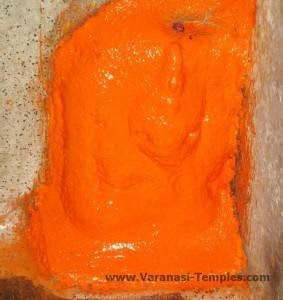
- Sanctum Sanctorum (Garbhagriha): The inner shrine houses the swayambhu (self-manifested) idol of Gaja Vinayak. The deity is depicted with six trunks, a rare and powerful form believed to represent the six directions and the six chakras of the body.
- Stone Carvings: Despite its modest size, the temple entrance and surrounding walls feature intricate carvings depicting various forms of Lord Ganesha and scenes from Hindu mythology.
4. Darshan & Ritual Logistics
The temple is a hub of spiritual activity, particularly during the morning hours. The atmosphere is charged with the chanting of Mantras and the ringing of bells.
Daily Timings
| Morning | Evening | Special Notes |
|---|---|---|
| 05:00 AM – 12:00 PM | 05:00 PM – 10:00 PM | Open throughout the day |
| *Timings may vary slightly during festivals. | ||
Key Sevas & Booking
Unlike large administrative temples, the Gaja Vinayak Temple allows devotees to perform basic Pooja by themselves, guided by the resident priest.
- Abhishekam: Ritual bathing of the deity with milk, honey, and curd (Best performed on Wednesdays).
- Archana: Recitation of the 108 names of Ganesha.
- Online Booking: While the temple primarily facilitates walk-in devotees, general offerings can be coordinated via the Varanasi Kashi Vishwanath Temple Trust portal for integrated city tours.
2026 Festival Calendar
Major festivals celebrated with fervor at Gaja Vinayak Temple:
- Ganesh Chaturthi: Date: Wednesday, August 19, 2026.
- Magh Ganesh Chaturthi: Date: Tuesday, February 4, 2026.
- Diwali: Date: Tuesday, October 21, 2026 (Special evening aarti).
5. Practical Visitor Guidance
Navigating the Old City of Varanasi requires preparation. The lanes leading to the temple are narrow and vibrant.
Rules & Etiquette
- Dress Code: Modest attire is required. Traditional Indian wear is preferred, though clean western clothes are acceptable. Avoid shorts or sleeveless tops.
- Photography: Strictly prohibited inside the sanctum sanctorum. Photography of the exterior architecture is permitted.
- Mobile & Lockers: Large bags and mobile phones are not allowed inside the inner shrine. Use mobile lockers available at the entrance shops (nominal fee applies).
- Accessibility: Due to the historic nature of the lanes, the path is uneven. It is not wheelchair accessible.
Crowd Management
- Best Time: Early morning (5:30 AM – 7:00 AM) or late evening (8:00 PM onwards) to avoid heavy crowds.
- Seasonal Advice: Varanasi summers (May-June) are extremely hot. Carry a water bottle and a handkerchief to wipe sweat. The monsoon (July-August) can make the stone steps slippery; wear rubber-soled footwear.
6. Pilgrimage Connectivity
How to Reach
Address: Ck.54/44, Raja Darwaja, Bhara Bhooteshwar Temple Area, Varanasi, Uttar Pradesh 221001.
- Nearest Airport: Lal Bahadur Shastri International Airport (LBS) is approximately 25 km away. Taxis are available to Dashashwamedh Ghat.
- Railway Station: Varanasi Junction (BSB) is 5 km from the city center. Rickshaws can take you to Chowk.
- From Chowk: Vehicles cannot enter the final lanes. From Chowk, it is a 10-15 minute walk through the bustling market. Follow the signs for “Raja Darwaja.”
Nearby Sacred Sites
Enhance your pilgrimage by visiting these nearby shrines:
- Bhara Bhooteshwar Temple: Located very close to Gaja Vinayak, this temple is dedicated to Lord Shiva and is one of the 56 Avimukta Lingas of Kashi.
- Sankat Mochan Hanuman Temple: Located a short rickshaw ride away (approx. 2 km), famous for its vermilion (sindoor) offering.
- Kashi Vishwanath Temple: The main Jyotirlinga is approximately 1.5 km from the Raja Darwaja area.
7. Frequently Asked Questions (FAQ)
1. Is there a VIP darshan entry?
Since the Gaja Vinayak Temple is a smaller shrine compared to the main Kashi Vishwanath Temple, there is no formal VIP entry system. However, early morning visits provide a private darshan experience.
2. What is the significance of the “Gaja” form?
The term “Gaja” symbolizes royalty, strength, and abundance. Worshipping Gaja Vinayak is believed to elevate one’s status and provide the resources necessary to lead a life of dignity, much like a king riding an elephant.
3. Can I perform a Shanti Puja here?
Yes, the resident priests can conduct small-scale Shanti Pujas and Ganesha Homa (fire rituals) for peace and prosperity, though prior coordination with the priest is recommended.
4. Is there an entry fee?
There is no entry fee for general darshan. However, offerings (flowers, sweets) and special poojas are subject to standard rates determined by the priest.
5. What is the best route for first-time visitors?
The easiest route is to head to Chowk via auto-rickshaw, then walk toward Raja Darwaja. Asking for directions to Bhara Bhooteshwar Temple will guide you directly to Gaja Vinayak Temple.
Recent Posts

Shri Kaamkoteeshwar Mandir, Varanasi – History & Significance
In the heart of Kashi, the eternal city of Lord Shiva, where the Ganges flows with celestial grace, stands the Shri Kaamkoteeshwar Mandir. This sacred Sannidhi is not merely a temple but a profound spiritual bridge between the Northern…

ओ सांवरे तूने ही मुझको संभाला – Lyrics & Meaning
ओ सांवरे तूने ही मुझको संभाला – A Prayer to Shyam Origin & Spiritual Essence Why This Bhajan Resonates Devotees chant this when overwhelmed by life’s storms—the refrain ‘तूने ही मुझको संभाला’ is the soul’s sigh of relief: “You…

कथा ये है महाराज मेरे की – Lyrics & Meaning
कथा ये है महाराज मेरे की छत्रपति संभाजी महाराज – A Prayer to Chhatrapati Sambhaji Maharaj Origin & Spiritual Essence Why This Bhajan Resonates Devotees chant this when their spirit feels tested—its powerful refrain “महाराज मेरे” is a soul’s…

Rigveda Samhita Yathartha Anuvada (ऋग्वेद संहिता यथार्थ अनुवाद) – Complete Set with Anvayartha & Hindi/English Translation
The Rigveda is the oldest surviving scripture of humanity and the foundational text of Sanātana Dharma. For serious students, scholars, UPSC aspirants studying ancient Indian history, Sanskrit learners, and spiritual seekers, a precise and grammatically structured translation is indispensable.…

आना भी अकेला है जाना भी अकेला है – Lyrics & Meaning | BharatTemples
आना भी अकेला है जाना भी अकेला है – A Prayer to the Divine Witness Origin & Spiritual Essence Why This Bhajan Resonates Devotees turn to this bhajan in moments of deep reflection—when life’s attachments begin to ache. The…

माता शेरावाली के द्वार जो भी जाता है – Lyrics & Meaning
माता शेरावाली के द्वार जो भी जाता है – A Prayer to Maa Sherawali Origin & Spiritual Essence Why This Bhajan Resonates Devotees turn to this bhajan in times of fear or uncertainty—its promise that no one leaves Maa’s…

मार लेना सपणी उबार लेणा भवरा – Lyrics & Meaning
मार लेना सपणी उबार लेणा भवरा – A Prayer to the Divine Beloved Origin & Spiritual Essence Why This Bhajan Resonates Devotees chant this in moments of deep vulnerability—its cry of “मार लेना सपणी, उबार लेणा भवरा” is the…

हमें श्याम सुंदर भरोसा तुम्हारा – Lyrics & Meaning
हमें श्याम सुंदर भरोसा तुम्हारा – A Prayer to Shyam Sundar Origin & Spiritual Essence Why This Bhajan Resonates Devotees chant this when feeling alone—its refrain ‘de do sahara’ is the soul’s cry for divine support. Lyrics in Hindi…

Mere Satguru Ne Di Thi Davai Lyrics in Hindi & Meaning
Mere Satguru Ne Di Thi Davai: Invoking the Guru’s Liberating Wisdom This soul-stirring bhajan venerates the Satguru (True Spiritual Master) as the divine physician who dispenses the only remedy for life’s deepest sufferings. Composed by Sant Karmaveer Tufani, it…

Janm Diyo Thari Maa Dukh Dekhiyo Lyrics in Hindi & Meaning
जन्म दियो थारी माँ दुख देखियो (Maa’s Grief Upon Birthing You) This soul-stirring Chetavani Bhajan (admonitory hymn) is addressed to the Divine Mother (Maa) – a call for repentance when children forget their filial duties in the dark age…