Krodhan Bhairav Temple, Varanasi: History, Darshan Timings & Complete Guide
Receive daily temple updates, divine darshan, and morning bhajans directly on WhatsApp.
Contents
- 1 1. Introduction & Spiritual Essence
- 2 2. Historical Origins & Scriptural Legend
- 3 3. Architectural Marvels
- 4 4. Darshan & Ritual Logistics
- 5 5. Practical Visitor Guidance
- 6 6. Pilgrimage Connectivity
- 7 7. Frequently Asked Questions (FAQs)
| Date built: | – |
|---|---|
| Deity: | Krodhan Bhairav |
| Architectural style: | Dravidian architecture |
| Major festivals | – |
| Locale: | Varanasi |
| District:: | Varanasi |
| Address: | – |
| Phone | – |
1. Introduction & Spiritual Essence
Nestled within the labyrinthine alleys of Kashi (Varanasi), the Krodhan Bhairav Temple stands as a powerful testament to the fierce yet protective energy of the divine. As the embodiment of Aadi Bhairav (the primal energy), this shrine is an integral part of the Ashta Bhairavas—the eight manifestations of Lord Shiva’s fierce form.
According to the sacred Kashi Khand (Chapter 72) of the Skanda Purana, after Goddess Durga vanquished the demon Durgasur, she created nine Shaktis and eight Bhairavs to protect the sanctity of Kashi and its devotees. Krodhan Bhairav is the guardian who removes fear and dispels darkness.
Phalaśruti: Why Devotees Visit
The spiritual significance of worshipping Krodhan Bhairav is profound. It is believed that:
- Removal of Fears: He annihilates internal and external fears, granting courage (Dhairya).
- Karmic Cleansing: Worship here helps cleanse ancestral karma and removes obstacles caused by malefic planetary alignments.
- Protection: As the guardian of Kashi, he protects devotees from evil spirits and negative energies.
📖 Related: Kaholeshwar Temple Varanasi: History, Darshan Timings & Complete Guide
2. Historical Origins & Scriptural Legend
The history of the Krodhan Bhairav Temple is woven into the ancient tapestry of Kashi’s spiritual lore.
Scriptural Authority: The Kashi Khand
While specific construction dates for the current structure are not recorded in modern dynastic history due to the temple’s antiquity, the Kashi Khand provides the primary theological blueprint. It asserts that Lord Shiva himself authorized the placement of these eight Bhairavs to serve as the eternal custodians of the city.
Local Oral Tradition
Tradition holds that Krodhan Bhairav is the Aadi Bhairav, representing the beginning of time and consciousness. The temple is located in the Kamachha area, a region historically associated with the accumulation of spiritual merit (Punya). Devotees believe that appearing before Krodhan Bhairav in Varanasi completes the holy Ashta Bhairav Yatra.
3. Architectural Marvels
While many temples in Varanasi feature the Nagara style, the Krodhan Bhairav Temple is distinct for its Dravidian architectural influence, evident in the pyramidal tower and the distinct shrine layout.
The Idol and Vastu
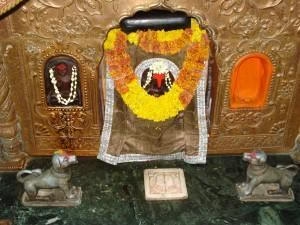
The deity is typically depicted with a garland of skulls, riding a dog, and holding the Trishul (trident). The Vastu Shastra of the temple aligns with the southern direction associated with Yama and protection.
Current Status
The temple is a protected heritage site managed by local authorities, preserving the sanctity of the ancient stone work amidst the bustling urban landscape of Varanasi.
4. Darshan & Ritual Logistics
Visiting Krodhan Bhairav requires adherence to specific timings to align with the daily liturgical cycle (Nitya Puja) of Kashi.
Daily Timings
| Session | Timing |
|---|---|
| Morning Darshan | 05:00 AM – 12:00 PM |
| Afternoon Break | 12:00 PM – 03:00 PM |
| Evening Darshan | 04:00 PM – 09:00 PM |
📖 Related: Belon Temple Bulandshehar: History, Darshan Timings & Sarva Mangala Devi Guide
*Note: Kashi is unique; the Bhairavas are often worshipped during the Sandhya (Twilight) periods.
Key Sevas & Booking
- Abhishekam: Performed with milk, honey, and ghee. Best time: Morning (7 AM – 9 AM).
- Archana: Recitation of Bhairav Kavach.
- Bhairav Havan: Conducted on Amavasya (New Moon).
Online Booking: Devotees can book specific Sevas through the official Varanasi temple trust portals or the Kashi Vishwanath Temple administration office at Ghat No. 5.
Festival Dates for 2026
- Maha Shivratri: February 26, 2026 (Major celebration for all Bhairavs).
- Kartik Purnima: November 4, 2026 (Deep Daan and special Aarti).
- Bhairav Ashtami: Specific date varies by lunar calendar; typically in March and October. In 2026, the spring Bhairav Ashtami falls in March.
5. Practical Visitor Guidance
Visiting the Krodhan Bhairav Temple requires preparation, as it is located in the dense, old city of Varanasi.
Rules and Etiquette
- Dress Code: Traditional attire is recommended. Men should wear dhoti/kurta; women should wear sarees or salwar kameez.
- Photography: Strictly prohibited inside the inner sanctum (Garbhagriha).
- Mobile Phones: Use of lockers is advised. The temple administration provides storage facilities near the entrance.
Crowd Management & Seasonal Advice
- Best Hours: 5:00 AM – 7:00 AM (Brahma Muhurta) for a peaceful darshan. Avoid 6:00 PM – 8:00 PM during festivals.
- Summer (May-June): Temperatures in Varanasi can exceed 40°C. Carry a water bottle and cover your head.
- Monsoon (July-Sept): The streets of Kamachha can flood; wear waterproof footwear.
6. Pilgrimage Connectivity
How to Reach
- By Air: Lal Bahadur Shastri International Airport (LBS) is approximately 25 km away. Taxis and e-rickshaws are available.
- By Rail: Varanasi Junction (BSB) is the nearest major railway station (5 km). Auto-rickshaws are the most common mode to reach Kamachha.
- By Road: The temple is located off NH 31 (Varanasi-Lucknow Highway). Access is via the Kamachha intersection.
📖 Related: Raj Putra Vinayak Temple, Varanasi: History, Darshan Timings & Guide
Nearby Sacred Sites (Pilgrimage Circuit)
- Batuk Bhairav Temple: Located very close to Krodhan Bhairav. It is one of the most famous Bhairav shrines in Varanasi.
- Kamakhya Devi Temple: An ancient temple nearby, often visited in conjunction with the Bhairav shrines.
- Sankat Mochan Hanuman Temple: Located about 2 km away, dedicated to Lord Hanuman.
_
Krodhan-Bhairav-300×225, Krodhan Bhairav Temple, Varanasi
_
7. Frequently Asked Questions (FAQs)
1. Is there a VIP Darshan entry at Krodhan Bhairav Temple?
Unlike the Kashi Vishwanath Corridor, the Krodhan Bhairav Temple does not have a formal VIP ticket system. However, paying a small donation to the temple priest (Panda) often allows for closer access to the sanctum during non-peak hours.
2. Can I offer alcohol (Shraap) to Krodhan Bhairav?
Traditionally, Bhairav is associated with offering (including liquor) to dispel poison and fear. However, due to the temple’s location in a residential area and modern administrative regulations, alcohol is not officially distributed or allowed inside the temple premises by the administration. Devotees often offer sweets or milk.
3. What is the significance of the dog in this temple?
The dog is the vahana (vehicle) of Bhairav. It symbolizes loyalty, vigilance, and the ability to track down negative karma. Feeding stray dogs near the temple is considered a pious act.
4. Is the temple accessible for elderly devotees?
The temple is located in a crowded lane. While there is no ramp, the distance from the main road is short. Auto-rickshaws can get very close to the entrance. We recommend assistance for those with mobility issues.
5. Where is the exact address located?
The temple is situated in the Kamachha area, near the Batuk Bhairav Temple. The precise address is B.31/126, Kamachha, Varanasi.