
Contents
Introduction & Spiritual Essence
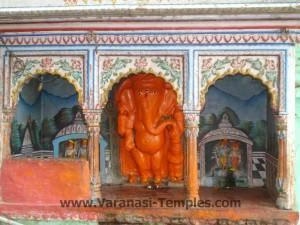
The ancient city of Varanasi (Kashi) is guarded by a network of sacred shrines dedicated to Lord Ganesha. Among the most revered is the Pichandil Vinayak Temple, a hidden gem nestled near the Ghats. This temple is dedicated to Lord Ganesha in his form as Pichandil Vinayak (sometimes spelled Panchandil Vinayak). The word “Pichandil” is derived from a local dialect referring to a specific type of sweet modak, which is considered the favorite offering of the Lord.
Primary Deity & Form: The presiding deity is a Swayambhu (self-manifested) idol of Lord Ganesha. Unlike many large statues, the idol here is revered for its ancient, natural form carved into the rock, embodying the essence of the Bhadra Nakshatra.
Phalaśruti: The Benefits of Visit
According to Kashi Khand (Skanda Purana), visiting Pichandil Vinayak offers specific spiritual benefits:
- Removal of Obstacles: Devotees visit to remove Vighnah (obstacles) from their paths, whether in career, education, or personal life.
- Ancestral Blessings: It is believed that praying here helps in cleansing ancestral karma, ensuring peace for departed souls.
- Success in Endeavors: As the “Lord of Success,” worshipping Pichandil ensures prosperity and success in new ventures.
Historical Origins & Scriptural Legend
Scriptural Reference: The temple finds mention in the Kashi Khand of the Skanda Purana. It is part of the 56 sacred shrines (Vinayakas) that are believed to protect the spiritual aura of Kashi.
Local Legend (Sthala Purana): Tradition holds that Lord Shiva, while battling the demon Tripurasura, faced a great obstacle. Lord Ganesha was created to remove this obstacle. In this specific area of Varanasi, Lord Ganesha is said to have taken the form of “Pichandil” (a sweet modak) to entice and pacify the demon forces or to bless his devotee, the sage Parashuram.
Architectural Age: While specific records of the builder are scarce, the architecture suggests a structure dating back several centuries, with renovations carried out by local trusts over the years to preserve its sanctity. It stands as a testament to the Typical Nagara style of North Indian temple architecture, adapted to the narrow bylanes of Varanasi.
Architectural Marvels
The Pichandil Vinayak Temple showcases the resilience of temple architecture in the crowded ghats of Varanasi.
Style and Layout
While specific ASI or UNESCO status is not attached to this minor shrine (unlike the grand Kashi Vishwanath or Sarnath sites), its structural integrity is maintained by local devotees. The temple follows a traditional Nagara influence, characterized by a vertical emphasis, though the construction is adapted to the tight urban space.
Notable Features
- The Sanctum (Garbhagriha): The inner sanctum houses the ancient rock-cut idol of Ganesha. The idol is carved with his consorts Riddhi and Siddhi.
- Vastu Alignment: Located at the base of a Banyan tree (Vat Vriksh) near Prahlad Ghat, the temple follows Vastu Shastra principles by being anchored in earth elements, providing stability and grounding to the worshippers.
- Stone Carvings: The surrounding stones are etched with traditional motifs and often adorned with fresh marigold garlands, creating a vibrant contrast against the ancient grey stone.
Darshan & Ritual Logistics
The temple maintains a schedule typical of Varanasi shrines, opening early for morning rituals and staying accessible for evening prayers.
Daily Timings
| Session | Timing | Activity |
|---|---|---|
| Morning Darshan | 06:00 AM – 12:00 PM | Mangala Aarti, Abhishekam |
| Mid-day Closure | 12:00 PM – 03:00 PM | Temple Rest (Shayan) |
| Evening Darshan | 03:00 PM – 09:00 PM | Sandhya Aarti, Bhog |
Key Sevas and Online Booking
While many rituals at Pichandil Vinayak are performed personally by devotees due to the intimate nature of the shrine, specific Sevas are popular:
- Maha Abhishekam: Performed on Sankashti Chaturthi.
- Modak Offering: 21 Modaks offered to the deity for wish fulfillment.
- Sankalp Pooja: For specific life goals (marriage, childbirth, career).
Booking Note: For general darshan, no booking is required. However, for special rituals during festivals, it is advisable to contact the local Phoolwala Trust or temple priests directly. For major Kashi festivals, bookings are often managed through the Kashi Vishwanath Trust portal.
2026 Festival Dates
- Ganesh Chaturthi: August 26, 2026
- Sankashti Chaturthi: Monthly (Check lunar calendar); January 28, March 28, September 24, 2026 are prominent dates.
- Varalakshmi Vratam: August 22, 2026.
Practical Visitor Guidance
Visiting the temple requires some preparation as it is located in the old city near the Ghats.
- Dress Code: Traditional attire is recommended. For men: Dhoti/Kurta or shirt and trousers. For women: Saree/Salwar Kameez. Avoid shorts or sleeveless tops.
- Photography: Photography is generally restricted inside the inner sanctum. Please seek permission from the priest for exterior shots.
- Accessibility: The temple is located below the Vat Vriksh near Prahlad Ghat. The approach involves walking down stone steps. It is not wheelchair accessible.
- Mobile Lockers: There are no formal locker facilities. It is advised to travel light and keep valuables at your hotel.
Crowd Management
- Best Hours: Early morning (6:00 AM – 7:00 AM) offers a peaceful Darshan. Evenings post 6:00 PM can be crowded.
- Seasonal Advice:
- May-June (Summer): Carry water and an umbrella; the stone steps reflect heat.
- July-Sept (Monsoon): The ghats can be slippery; wear rubber sandals with grip.
Pilgrimage Connectivity
How to Reach Pichandil Vinayak Temple
The temple is strictly in the pedestrian zone of the old city.
- Nearest Airport: Lal Bahadur Shastri International Airport (LBS) Varanasi (approx. 25 km). From there, take a taxi to Godaulia or Dasaswamedh Ghat.
- Nearest Railway Station: Varanasi Junction (BSB) (approx. 6 km). Take an auto to Godaulia or Assi Ghat.
- Specific Route: From the main Ghats area, head towards Prahlad Ghat Chauraha. Take a rickshaw to the drop point, then walk towards the river. The temple is below the large Banyan tree.
- Boat Access: You can hire a boat to Prahlad Ghat and walk up the steps.
Nearby Sacred Sites (Pilgrimage Circuit)
- Kashi Vishwanath Jyotirlinga: The main Jyotirlinga, located about 1.5 km away via the narrow lanes.
- Sankat Mochan Hanuman Temple: Famous for relieving troubles, located near Assi Ghat (2 km).
- Durga Temple (Monkey Temple): A vibrant red temple dedicated to Goddess Durga, 1 km away.
Frequently Asked Questions (FAQs)
1. Is there a VIP darshan entry at Pichandil Vinayak Temple?
No, due to the temple’s small size and intimate nature, there is no specific VIP darshan entry. However, visiting early in the morning or late at night ensures a crowd-free experience.
2. Can we perform the marriage ritual (Vivaha) here?
While Ganesha is worshipped before any auspicious ceremony, this specific shrine is not typically used for the main marriage ceremony due to space constraints. Couples usually visit here for blessings after the wedding or before.
3. What is the significance of the Banyan tree?
The temple is situated below a Vat Vriksh (Banyan tree), which is sacred in Hinduism. It represents Lord Brahma and the Trimurti. Worshipping Ganesha under this tree is believed to amplify spiritual energies and grant longevity.
4. Is there an entry fee?
There is no entry fee for general darshan. However, donations are accepted and highly encouraged to maintain the temple premises.
5. What offering (Naivedyam) should I bring?
Modak is the preferred offering for Lord Ganesha. You can also offer Durva grass (21 blades), red flowers, and ladoos. Most items are available at shops near Prahlad Ghat.
Recent Posts

ओ सांवरे तूने ही मुझको संभाला – Lyrics & Meaning
ओ सांवरे तूने ही मुझको संभाला – A Prayer to Shyam Origin & Spiritual Essence Why This Bhajan Resonates Devotees chant this when overwhelmed by life’s storms—the refrain ‘तूने ही मुझको संभाला’ is the soul’s sigh of relief: “You…

कथा ये है महाराज मेरे की – Lyrics & Meaning
कथा ये है महाराज मेरे की छत्रपति संभाजी महाराज – A Prayer to Chhatrapati Sambhaji Maharaj Origin & Spiritual Essence Why This Bhajan Resonates Devotees chant this when their spirit feels tested—its powerful refrain “महाराज मेरे” is a soul’s…

Rigveda Samhita Yathartha Anuvada (ऋग्वेद संहिता यथार्थ अनुवाद) – Complete Set with Anvayartha & Hindi/English Translation
The Rigveda is the oldest surviving scripture of humanity and the foundational text of Sanātana Dharma. For serious students, scholars, UPSC aspirants studying ancient Indian history, Sanskrit learners, and spiritual seekers, a precise and grammatically structured translation is indispensable.…

आना भी अकेला है जाना भी अकेला है – Lyrics & Meaning | BharatTemples
आना भी अकेला है जाना भी अकेला है – A Prayer to the Divine Witness Origin & Spiritual Essence Why This Bhajan Resonates Devotees turn to this bhajan in moments of deep reflection—when life’s attachments begin to ache. The…

माता शेरावाली के द्वार जो भी जाता है – Lyrics & Meaning
माता शेरावाली के द्वार जो भी जाता है – A Prayer to Maa Sherawali Origin & Spiritual Essence Why This Bhajan Resonates Devotees turn to this bhajan in times of fear or uncertainty—its promise that no one leaves Maa’s…

मार लेना सपणी उबार लेणा भवरा – Lyrics & Meaning
मार लेना सपणी उबार लेणा भवरा – A Prayer to the Divine Beloved Origin & Spiritual Essence Why This Bhajan Resonates Devotees chant this in moments of deep vulnerability—its cry of “मार लेना सपणी, उबार लेणा भवरा” is the…

हमें श्याम सुंदर भरोसा तुम्हारा – Lyrics & Meaning
हमें श्याम सुंदर भरोसा तुम्हारा – A Prayer to Shyam Sundar Origin & Spiritual Essence Why This Bhajan Resonates Devotees chant this when feeling alone—its refrain ‘de do sahara’ is the soul’s cry for divine support. Lyrics in Hindi…

Mere Satguru Ne Di Thi Davai Lyrics in Hindi & Meaning
Mere Satguru Ne Di Thi Davai: Invoking the Guru’s Liberating Wisdom This soul-stirring bhajan venerates the Satguru (True Spiritual Master) as the divine physician who dispenses the only remedy for life’s deepest sufferings. Composed by Sant Karmaveer Tufani, it…

Janm Diyo Thari Maa Dukh Dekhiyo Lyrics in Hindi & Meaning
जन्म दियो थारी माँ दुख देखियो (Maa’s Grief Upon Birthing You) This soul-stirring Chetavani Bhajan (admonitory hymn) is addressed to the Divine Mother (Maa) – a call for repentance when children forget their filial duties in the dark age…
Bhadi Sabha Mein Thane Manaun Lyrics in Hindi & Meaning
Bhadi Sabha Mein Thane Manaun: Invoking the Spear-Wielding Mother Mata Bhawani (श्री ज्वाला भवानी), the fiery manifestation of Shakti worshipped as the Protector of Dharma in Her Dhaulagarh sanctum. Origin & Spiritual Essence Composed in Rajasthani folk tradition by…