Bhagavad Gita: Chapter 2, Verse 12
Receive daily temple updates, divine darshan, and morning bhajans directly on WhatsApp.
Contents
Chapter 2, Verse 12
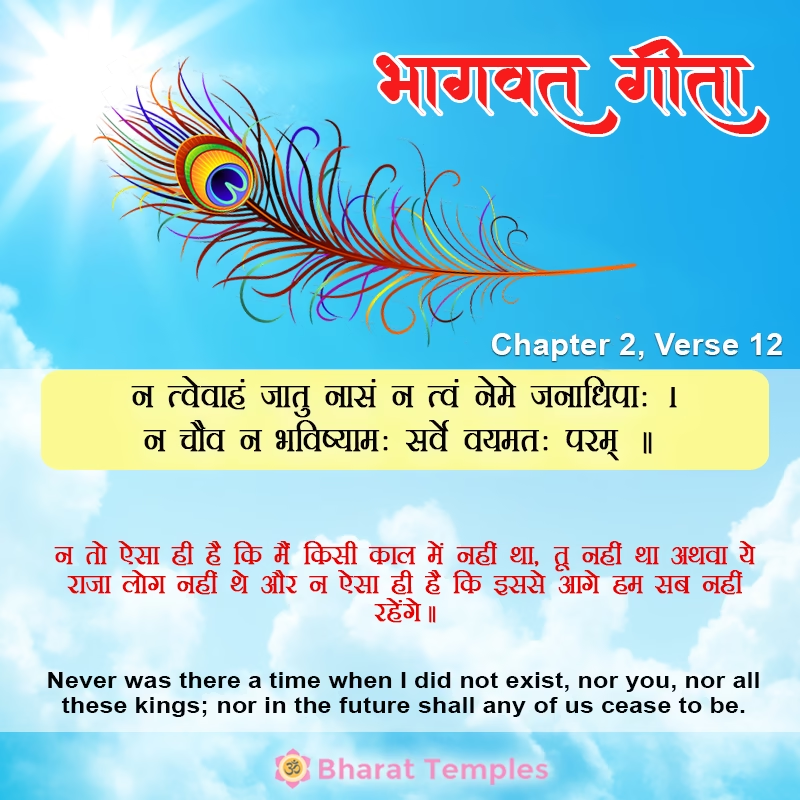
न त्वेवाहं जातु नासं न त्वं नेमे जनाधिपा |
न चैव न भविष्याम: सर्वे वयमत: परम् || 2.12 ||
na tvevāhaṁ jātu nāsaṁ na tvaṁ neme janādhipāḥ
na chaiva na bhaviṣhyāmaḥ sarve vayamataḥ param
भावार्थ:
न तो ऐसा ही है कि मैं किसी काल में नहीं था, तू नहीं था अथवा ये राजा लोग नहीं थे और न ऐसा ही है कि इससे आगे हम सब नहीं रहेंगे॥12॥
Translation
Never was there a time when I did not exist, nor you, nor all these kings; nor in the future shall any of us cease to be.
Explanation in English:
Here, Lord Krishna begins to reveal a fundamental truth about the eternal nature of the self (ātman) — the doctrine of the imperishable soul.
Let’s break it down:
- “Na tu eva ahaṁ jātu nāsaṁ” – “There was never a time when I did not exist…”
Krishna says He has always existed — pointing to His divine, eternal nature. - “Na tvaṁ” – “Nor you (Arjuna)…”
Arjuna too, as a soul, has always existed — before birth and beyond death. - “Na ime janādhipāḥ” – “Nor these kings…”
Even the warriors and rulers on both sides of the battlefield are eternal souls. - “Na chaiva na bhaviṣyāmaḥ” – “Nor shall we ever cease to exist…”
Krishna confirms that the soul never ceases—it always was and always will be.
📖 Related: इक दिन काहना शोर मचाये, पेट पकड़ चिलाये अरे क्या हो गया है, अरे क्या हो गया है
Key Teaching:
This verse introduces the principle of the eternal soul (ātman):
- The body is temporary, but the self is timeless.
- No one truly “dies” — the soul merely transitions from one state to another.
Krishna uses this truth to calm Arjuna’s grief and correct his attachment to the physical forms of his loved ones.
Summary:
“You, I, and all beings have always existed and always will. The soul is eternal, and no one ever truly ceases to be.”
This is the spiritual foundation upon which Krishna will build his teachings on dharma (duty), detachment, and devotion.