
Contents
- 1 1. Introduction & Spiritual Essence
- 2 2. Historical Origins & Scriptural Legend
- 3 3. Architectural Marvels
- 4 4. Darshan & Ritual Logistics
- 5 5. Practical Visitor Guidance
- 6 6. Pilgrimage Connectivity
- 7 7. Frequently Asked Questions (FAQ)
- 7.1 1. Is there a VIP or special entry for Kashyapeshwar Temple?
- 7.2 2. What is the significance of the ‘Antargrihi Yatra’?
- 7.3 3. Can I offer milk or water to the Shiva Lingam?
- 7.4 4. Is there a direct online booking system for this specific temple?
- 7.5 5. What is the best route from Kashi Vishwanath Temple?
1. Introduction & Spiritual Essence
Nestled within the sacred geography of Kashi (Varanasi), the Kashyapeshwar Temple stands as a profound spiritual anchor within the Antargrihi Yatra. This ancient shrine is dedicated to Kashyapeshwar, a manifestation of Lord Shiva.
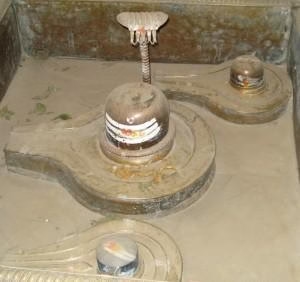
Form & Significance: The deity is revered as a Swayambhu (self-manifested) Lingam. According to local lore and mythological texts, this Lingam was originally installed by Sage Kashyap, one of the Saptarishis.
Phalaśruti (Spiritual Benefits):
Scriptural records and oral traditions suggest that visiting this temple holds immense merit. Kashi Khand, Chapter 100, explicitly prescribes the Antargrihi Yatra, which includes Kashyapeshwar.
Devotees believe that worshipping here leads to:
– Mukti (Liberation): Attaining freedom from the cycle of rebirth.
– Ancestral Cleansing: Performing rituals here is believed to cleanse ancestral karma.
– Inner Peace: Located in the vicinity of Harikesheshwar, it provides a serene atmosphere away from the bustling streets.
2. Historical Origins & Scriptural Legend
Scriptural Roots: The Kashi Khand
The temple’s primary scriptural reference is derived from the Kashi Khand of the Skanda Purana. It details the sacred tour of Kashi, known as the Antargrihi Yatra. This Yatra covers the divine inner sanctum of Kashi, and Kashyapeshwar is a pivotal deity in this sequence.
Oral Tradition & The Sage
Tradition holds that the temple was established to honor Sage Kashyap. The temple records suggest that the Lingam has been worshipped continuously for centuries, surviving the ebb and flow of history and invasions. The proximity to Jangambari Mutt (a historic monastery) further underscores its deep roots in the ascetic traditions of Varanasi.
3. Architectural Marvels
The architecture of Kashyapeshwar Temple is a classic example of the indigenous temple styles found in Varanasi, often categorized under the Nagara school of architecture with distinct North Indian influences.
Key Architectural Elements:
- The Sanctum (Garbhagriha): The inner sanctum houses the Swayambhu Lingam. It is designed to be intimate, allowing for a personal connection during darshan.
- Entrance & Steps: As noted in local guides, the temple is accessed via a flight of steps, placing the shrine slightly above the street level, denoting its elevation in spiritual hierarchy.
- Location Context: While specific ASI status varies across Kashi’s smaller shrines, the temple’s structure integrates seamlessly into the dense urban fabric of Varanasi, characterized by narrow alleys and ancient stonework.
4. Darshan & Ritual Logistics
While specific opening hours for smaller shrines in Kashi often depend on the priest’s schedule, the general timings for Antargrihi temples align with standard temple schedules.
Daily Timings (Estimated for 2026)
| Session | Timing |
|---|---|
| Morning Darshan | 05:00 AM – 12:00 PM |
| Afternoon Break | 12:00 PM – 03:00 PM |
| Evening Darshan | 04:00 PM – 09:00 PM |
Key Sevas & Online Booking
Note: For smaller shrines like Kashyapeshwar, online booking is typically centralized through the Kashi Vishwanath Temple (KVT) Trust or local Pandits.
- Rudrabhishekam: Performed for prosperity and health.
- Maha Mrityunjaya Jaap: For longevity and protection from calamities.
- Archana: Daily prayers and flower offerings.
Devotees are advised to contact local authorized guides or the Jangambari Mutt priests for on-site bookings, as specific online portals for Kashyapeshwar alone may not exist separately from the broader Kashi Vishwanath complex.
2026 Festival Calendar (Varanasi)
- Shivratri (March 2026): A grand celebration with night-long vigil. Highly recommended for darshan.
- Kartik Purnima (November 2026): Lighting of diyas and special Deep Daan rituals.
- Sawan Mondays (July-August 2026): Peak pilgrimage season. Expect crowds from early morning.
5. Practical Visitor Guidance
Dress Code & Etiquette
As with all Shiva temples in Varanasi, modest attire is required. Traditional Indian wear (Kurta-Pajama, Saree/Salwar Kameez) is recommended. Leather items are generally restricted inside the sanctum.
Crowd Management & Best Time to Visit
- Best Hours: Early morning (5:00 AM – 7:00 AM) or late evening (after 8:00 PM) offers the most peaceful darshan.
- Seasonal Advice: Varanasi summers (May-June) are scorching. Carry water and protect yourself from the sun. The temple is small and can get warm; visiting during winter (Oct-Feb) is ideal.
- Accessibility: Due to the location in the old city (Jangambari area), accessibility for wheelchairs is limited due to stairs and narrow lanes. A rickshaw can take you very close to the steps.
Photography & Lockers
Photography is usually restricted inside the Garbhagriha. Mobile phones are permitted but should be kept silent. There are no specific electronic lockers at this small shrine; visitors usually carry their belongings. It is advisable to travel light.
6. Pilgrimage Connectivity
How to Reach Kashyapeshwar Temple
Location: D-35/79, Near Jangambari Mutt, Jangambari, Varanasi.
- By Air: The nearest airport is Lal Bahadur Shastri International Airport (VNS), approximately 25 km away (1 hour drive).
- By Rail: Varanasi Junction (BSB) is the major railway station, about 6-7 km away. Autos and cycle-rickshaws are readily available.
- By Road: The temple lies within the old city. Access is best via Godowlia or Sonarpura. Private vehicles are restricted in many zones; rickshaws are the preferred mode to reach the Jangambari Mutt area.
Nearby Sacred Sites
Expand your pilgrimage circuit by visiting these nearby shrines:
- Harikesheshwar Temple: Mentioned in the Kashi Khand alongside Kashyapeshwar.
- Jangambari Mutt: Located right next to the temple, a historic seat of the Jangam sect.
- Kashi Vishwanath Temple (Shri Kashi Vishwanath Corridor): The primary spiritual hub of Kashi, located a short rickshaw ride away.
7. Frequently Asked Questions (FAQ)
1. Is there a VIP or special entry for Kashyapeshwar Temple?
Generally, no. Due to its location within the narrow lanes of the old city, there is no separate VIP entry infrastructure. However, visiting during off-peak hours ensures a swift and undisturbed darshan.
2. What is the significance of the ‘Antargrihi Yatra’?
The Antargrihi Yatra is a pilgrimage circuit prescribed in the Kashi Khand of the Skanda Purana. It covers deities located within the innermost spiritual circle of Kashi. Completing this Yatra is believed to grant liberation (Moksha).
3. Can I offer milk or water to the Shiva Lingam?
Yes, but generally through the temple priest. It is recommended to purchase offerings from the authorized stalls near the temple to ensure purity. Self-carried liquids may be subject to checking.
4. Is there a direct online booking system for this specific temple?
There is no dedicated website for Kashyapeshwar Temple. Devotees seeking specific services (like Abhishekam) should coordinate with local priests at Jangambari Mutt or use the general Kashi Vishwanath Temple online portal for broader pilgrimage planning.
5. What is the best route from Kashi Vishwanath Temple?
From the Kashi Vishwanath Corridor, take a rickshaw towards Godowlia. From Godowlia, proceed towards Sonarpura and ask for Jangambari Mutt. The temple is located on the left side of the lane leading up from the Mutt.
Recent Posts

ओ सांवरे तूने ही मुझको संभाला – Lyrics & Meaning
ओ सांवरे तूने ही मुझको संभाला – A Prayer to Shyam Origin & Spiritual Essence Why This Bhajan Resonates Devotees chant this when overwhelmed by life’s storms—the refrain ‘तूने ही मुझको संभाला’ is the soul’s sigh of relief: “You…

कथा ये है महाराज मेरे की – Lyrics & Meaning
कथा ये है महाराज मेरे की छत्रपति संभाजी महाराज – A Prayer to Chhatrapati Sambhaji Maharaj Origin & Spiritual Essence Why This Bhajan Resonates Devotees chant this when their spirit feels tested—its powerful refrain “महाराज मेरे” is a soul’s…

Rigveda Samhita Yathartha Anuvada (ऋग्वेद संहिता यथार्थ अनुवाद) – Complete Set with Anvayartha & Hindi/English Translation
The Rigveda is the oldest surviving scripture of humanity and the foundational text of Sanātana Dharma. For serious students, scholars, UPSC aspirants studying ancient Indian history, Sanskrit learners, and spiritual seekers, a precise and grammatically structured translation is indispensable.…

आना भी अकेला है जाना भी अकेला है – Lyrics & Meaning | BharatTemples
आना भी अकेला है जाना भी अकेला है – A Prayer to the Divine Witness Origin & Spiritual Essence Why This Bhajan Resonates Devotees turn to this bhajan in moments of deep reflection—when life’s attachments begin to ache. The…

माता शेरावाली के द्वार जो भी जाता है – Lyrics & Meaning
माता शेरावाली के द्वार जो भी जाता है – A Prayer to Maa Sherawali Origin & Spiritual Essence Why This Bhajan Resonates Devotees turn to this bhajan in times of fear or uncertainty—its promise that no one leaves Maa’s…

मार लेना सपणी उबार लेणा भवरा – Lyrics & Meaning
मार लेना सपणी उबार लेणा भवरा – A Prayer to the Divine Beloved Origin & Spiritual Essence Why This Bhajan Resonates Devotees chant this in moments of deep vulnerability—its cry of “मार लेना सपणी, उबार लेणा भवरा” is the…

हमें श्याम सुंदर भरोसा तुम्हारा – Lyrics & Meaning
हमें श्याम सुंदर भरोसा तुम्हारा – A Prayer to Shyam Sundar Origin & Spiritual Essence Why This Bhajan Resonates Devotees chant this when feeling alone—its refrain ‘de do sahara’ is the soul’s cry for divine support. Lyrics in Hindi…

Mere Satguru Ne Di Thi Davai Lyrics in Hindi & Meaning
Mere Satguru Ne Di Thi Davai: Invoking the Guru’s Liberating Wisdom This soul-stirring bhajan venerates the Satguru (True Spiritual Master) as the divine physician who dispenses the only remedy for life’s deepest sufferings. Composed by Sant Karmaveer Tufani, it…

Janm Diyo Thari Maa Dukh Dekhiyo Lyrics in Hindi & Meaning
जन्म दियो थारी माँ दुख देखियो (Maa’s Grief Upon Birthing You) This soul-stirring Chetavani Bhajan (admonitory hymn) is addressed to the Divine Mother (Maa) – a call for repentance when children forget their filial duties in the dark age…
Bhadi Sabha Mein Thane Manaun Lyrics in Hindi & Meaning
Bhadi Sabha Mein Thane Manaun: Invoking the Spear-Wielding Mother Mata Bhawani (श्री ज्वाला भवानी), the fiery manifestation of Shakti worshipped as the Protector of Dharma in Her Dhaulagarh sanctum. Origin & Spiritual Essence Composed in Rajasthani folk tradition by…