
Contents
| Date built: | 1811-1815 A.D. |
|---|---|
| Deity: | – |
| Architectural style: | – |
| Major festivals | Navratri |
| Locale: | – |
| District:: | Panchkula |
| Address: | – |
| Phone | – |
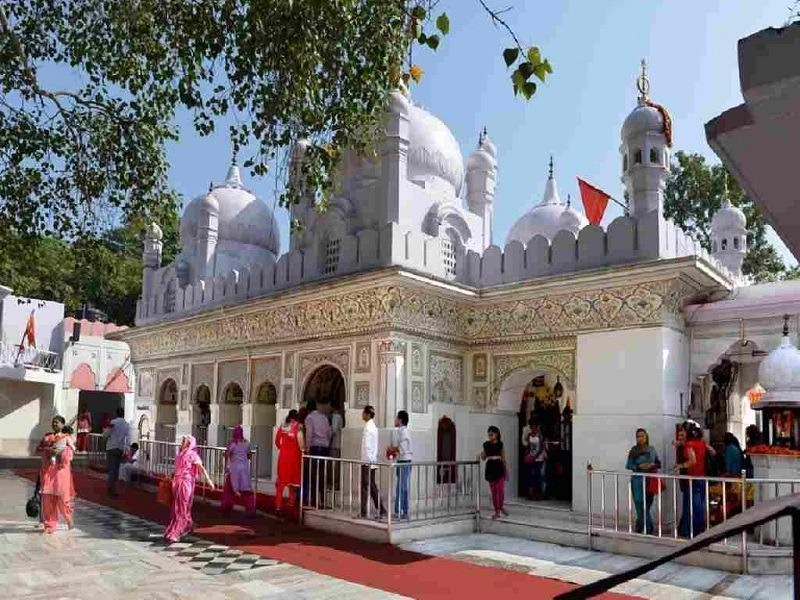
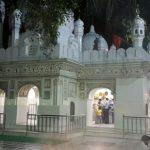
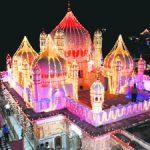
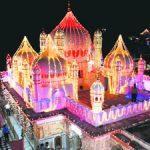
Mata Mansa Devi is a Hindu temple dedicated to goddess Mansa Devi, a form of Shakti, in the Panchkula district of Haryana state in India. The temple complex is spread of 100 acres (0.40 km2) of the Shivalik foothills in the village of Bilaspur, near Mani Majra, and Panchkula, 10 km from Chandi Mandir, another noted Devi shrine in the region, both just outside Chandigarh.
It is one of the prominent Shakti temples of North India involving 7 goddesses, namely Mata Mansa Devi, Naina Devi, Jawalamukhi, Chintpurni, Brajeshwari, Chamunda Devi and Jayanti Devi. Thousands of devotees visit the shrine from various parts of the country, and especially during the Navratra mela, this number rises to lakhs everyday for the nine auspicious days.
1. Introduction & Spiritual Essence
The primary deity at this shrine is Mata Mansa Devi, an embodiment of Shakti (divine feminine power). The idol is a Murti seated in a closed sanctum, and the temple is widely recognized as a Manaskamna Siddh Peeth—a site where the wishes of the sincere devotee are believed to be fulfilled.
Phalaśruti (Spiritual Benefits):
Devotees visit specifically to offer Manasika (mental) prayers. It is a prevailing belief that tying a sacred thread (lagaan) on the ancient trees within the complex while making a wish results in its manifestation. The temple is also vital for cleansing ancestral karma, as pilgrims perform Shradh and Tarpan rituals here to honor their lineage.
2. Historical Origins & Scriptural Legend
The Sthala Purana (Local Legend)
According to local tradition and oral folklore, the site derives its sanctity from the legend of Sati. It is believed that when Goddess Sati’s body was dismembered, her forehead fell at this location in the Shivalik foothills. For years, local residents observed a cow offering milk to three adjoining stones (Pindies) atop the hill. When these stones were identified as the manifestation of the Goddess, a temple was constructed.
Construction History
The current structural temple was built between 1811 and 1815 A.D. by Maharaja Gopal Das Singh, the ruler of the Mani Majra princely state. Tradition holds that the King constructed a secret underground tunnel (approx. 3 km long) connecting his fort to the temple, which he used to visit daily with the Queen for Darshan.
In 1840, a second temple known as the Patiala ShivalayaGovernment of Haryana enacted the Shri Mata Mansa Devi Shrine Act, establishing the Shri Mata Mansa Devi Shrine Board (SMMDSB) to preserve the heritage and manage administration.
3. Architectural Marvels
The temple complex spans 100 acres of the Shivalik foothills. The architecture is a regional adaptation of the Nagara style, optimized for the hilly terrain.
- Sanctum & Panels: The main temple features 38 intricately painted panels depicting scenes from Hindu mythology. The walls and ceilings are adorned with traditional floral motifs and geometric patterns using natural pigments.
- The Tree of Faith: A central attraction within the courtyard is a large, ancient tree. Devotees perform a ritual here where they tie a sacred thread around the trunk to seal their vows.
- Compound Layout: The complex includes the main temple, the Patiala Shivalaya (reminiscent of Sikh architectural aesthetics with lotus motifs), and a recently constructed Yagya Shala capable of hosting large-scale Vedic fire rituals.
Photo Gallery
4. Darshan & Ritual Logistics (2026 Guide)
Darshan at Mata Mansa Devi Mandir is governed by specific timings that vary seasonally. The SMMDSB manages online booking for Sevas to streamline the process.
Daily Temple Timings
| Session | Timings | Details |
|---|---|---|
| Morning Darshan | 06:00 AM – 12:00 PM | Gates open at sunrise. Best time for quiet meditation. |
| Afternoon Break | 12:00 PM – 03:00 PM | Sanctum is closed for Abhishekam and preparations. |
| Evening Darshan | 03:00 PM – 09:00 PM | Includes Aarti at sunset (approx 6:30 PM). |
Key Sevas & Online Booking
Devotees can book the following services via the official SMMDSB website:
- Abhishekam: Ritual bathing of the idol with milk, honey, and ghee.
- Archana: Chanting of names (individual or family).
- Yagya/Havan: Fire rituals performed at the Yagya Shala for specific life events (Marriage, Griha Pravesh).
Major Festivals 2026
- Chaitra Navratri: March 30 – April 7, 2026
- Sharad Navratri (Dussehra): September 21 – September 30, 2026. Expect maximum crowds during these 9 days.
- Maha Shivaratri: February 26, 2026. Special night-long Jagran is organized.
- Mansa Devi Jayanti: June 20, 2026 (Dates as per Panchang).
5. Practical Visitor Guidance
To ensure a smooth pilgrimage, adhering to the following guidelines is essential:
- Dress Code: Traditional Indian attire is recommended (Saree, Kurta-Pajama, or Dhoti). Avoid shorts, sleeveless tops, or ripped jeans to maintain the sanctity of the premises.
- Photography: Photography is strictly prohibited inside the main sanctum. Mobile photography is allowed in the complex, but drones are banned.
- Mobile Lockers: Free digital lockers and a deposit counter for shoes/leather items (belts, wallets) are available at the main entrance.
- Crowd Management:
- Best Hours: Weekdays between 8:00 AM and 10:00 AM.
- Seasonal Tip: During May and June (peak summer in Haryana), carry a water bottle and head covering. The SMMDSB often distributes Sharbat (cool drinks) during Navratri.
6. Pilgrimage Connectivity
How to Reach
- By Air: The nearest airport is Chandigarh International Airport (IXC), approximately 20 km away.
- By Rail: The nearest major railway station is Chandigarh Junction (20 km). The Mani Majra station is nearby but limited in connectivity.
- By Road: The temple is located on the foothills of Shivalik. It is accessible via NH 5 (formerly NH 22) and the Badli-Morni Road. Regular bus services ply from the ISBT Sector 43, Chandigarh, and ISBT Panchkula.
Nearby Sacred Sites (Pilgrimage Circuit)
For a complete spiritual journey, combine your visit with:
- Chandi Mandir (10 km): A historic temple dedicated to Goddess Chandi (a form of Durga) in the Shivalik hills.
- Nada Sahib Gurudwara (15 km): A historic Gurdwara on the banks of the Ghaggar river, significant for Sikh history.
- Kalka (25 km): Home to the Kali Mata Temple and the gateway to the Himalayan Toy Train route (UNESCO World Heritage).
Contact Details
Official Address: Village Bilaspur, near Mani Majra, Panchkula, Haryana.
7. Frequently Asked Questions (FAQs)
Is there a VIP Darshan entry available?
Yes, the Shrine Board offers a Paid Darshan ticket system (usually nominal fees ranging from ₹20-₹50) which allows pilgrims to bypass the general queue during peak hours. Senior citizens and differently-abled visitors are provided priority access free of cost upon presentation of valid ID.
Can I book Seva for a specific date in 2026?
Yes, online booking for Archana and Abhishekam opens in advance. It is highly recommended to book at least 15 days prior to major festivals like Navratri or Maha Shivaratri.
Is there a cloakroom facility available?
Absolutely. The temple administration provides secure digital lockers at the entrance where devotees can deposit electronic devices, leather goods, and luggage for free or minimal charges.
What is the significance of the ‘Mansa’ name?
The term ‘Mansa’ is derived from the Sanskrit word Manas (mind/wish). She is the wish-fulfilling goddess. Historically, she is also associated with the power of snake venom (Manasa is another snake goddess, but here it denotes the power of the mind).
Are foreign tourists allowed?
Yes, the temple welcomes visitors from all backgrounds. However, all visitors must remove footwear and dress modestly. The shrine board provides guidance for international visitors regarding rituals and history.
Where can I stay near the temple?
There are several Dharamshalas managed by the Shrine Board within the complex. Additionally, Panchkula and Chandigarh offer a wide range of hotels and guest houses from budget to luxury.
Recent Posts

ओ सांवरे तूने ही मुझको संभाला – Lyrics & Meaning
ओ सांवरे तूने ही मुझको संभाला – A Prayer to Shyam Origin & Spiritual Essence Why This Bhajan Resonates Devotees chant this when overwhelmed by life’s storms—the refrain ‘तूने ही मुझको संभाला’ is the soul’s sigh of relief: “You…

कथा ये है महाराज मेरे की – Lyrics & Meaning
कथा ये है महाराज मेरे की छत्रपति संभाजी महाराज – A Prayer to Chhatrapati Sambhaji Maharaj Origin & Spiritual Essence Why This Bhajan Resonates Devotees chant this when their spirit feels tested—its powerful refrain “महाराज मेरे” is a soul’s…

Rigveda Samhita Yathartha Anuvada (ऋग्वेद संहिता यथार्थ अनुवाद) – Complete Set with Anvayartha & Hindi/English Translation
The Rigveda is the oldest surviving scripture of humanity and the foundational text of Sanātana Dharma. For serious students, scholars, UPSC aspirants studying ancient Indian history, Sanskrit learners, and spiritual seekers, a precise and grammatically structured translation is indispensable.…

आना भी अकेला है जाना भी अकेला है – Lyrics & Meaning | BharatTemples
आना भी अकेला है जाना भी अकेला है – A Prayer to the Divine Witness Origin & Spiritual Essence Why This Bhajan Resonates Devotees turn to this bhajan in moments of deep reflection—when life’s attachments begin to ache. The…

माता शेरावाली के द्वार जो भी जाता है – Lyrics & Meaning
माता शेरावाली के द्वार जो भी जाता है – A Prayer to Maa Sherawali Origin & Spiritual Essence Why This Bhajan Resonates Devotees turn to this bhajan in times of fear or uncertainty—its promise that no one leaves Maa’s…

मार लेना सपणी उबार लेणा भवरा – Lyrics & Meaning
मार लेना सपणी उबार लेणा भवरा – A Prayer to the Divine Beloved Origin & Spiritual Essence Why This Bhajan Resonates Devotees chant this in moments of deep vulnerability—its cry of “मार लेना सपणी, उबार लेणा भवरा” is the…

हमें श्याम सुंदर भरोसा तुम्हारा – Lyrics & Meaning
हमें श्याम सुंदर भरोसा तुम्हारा – A Prayer to Shyam Sundar Origin & Spiritual Essence Why This Bhajan Resonates Devotees chant this when feeling alone—its refrain ‘de do sahara’ is the soul’s cry for divine support. Lyrics in Hindi…

Mere Satguru Ne Di Thi Davai Lyrics in Hindi & Meaning
Mere Satguru Ne Di Thi Davai: Invoking the Guru’s Liberating Wisdom This soul-stirring bhajan venerates the Satguru (True Spiritual Master) as the divine physician who dispenses the only remedy for life’s deepest sufferings. Composed by Sant Karmaveer Tufani, it…

Janm Diyo Thari Maa Dukh Dekhiyo Lyrics in Hindi & Meaning
जन्म दियो थारी माँ दुख देखियो (Maa’s Grief Upon Birthing You) This soul-stirring Chetavani Bhajan (admonitory hymn) is addressed to the Divine Mother (Maa) – a call for repentance when children forget their filial duties in the dark age…
Bhadi Sabha Mein Thane Manaun Lyrics in Hindi & Meaning
Bhadi Sabha Mein Thane Manaun: Invoking the Spear-Wielding Mother Mata Bhawani (श्री ज्वाला भवानी), the fiery manifestation of Shakti worshipped as the Protector of Dharma in Her Dhaulagarh sanctum. Origin & Spiritual Essence Composed in Rajasthani folk tradition by…