
Contents
Introduction & Spiritual Essence: The Grace of Sowbhagya Gauri
Amidst the timeless spiritual chaos of Varanasi, where the holy Ganges meets the ancient lanes of Kashi, resides a deity of immense prosperity and grace: Sowbhagya Gauri. Located within the sacred precincts of the Kashi Vishwanath Corridor, specifically near Adi Vishwanath Temple, this shrine is dedicated to Maa Gauri—a form of Goddess Parvati representing domestic happiness, marital bliss, and unbroken good fortune (Sowbhagya).
For the devotee, the presence of Sowbhagya Gauri in Varanasi is not merely symbolic; it is essential for completing the Pancha Devi Darshan of Kashi. While Vishnupati (Durga) protects the city’s periphery, Sowbhagya Gauri maintains the sanctity of the inner household.
Phalaśruti: The Benefits of Darshan
According to the Kashi Khand of the Skanda Purana, the holy Gyan Vapi is located adjacent to the Sowbhagya Gauri temple. It is believed that bathing in the Gyan Vapi and immediately offering prayers to the Goddess removes ancestral karma and grants Sowbhagya (good fortune). Unmarried devotees pray here for a suitable match, while married couples seek longevity and happiness for their partners.
Historical Origins & Scriptural Legend
The existence of Sowbhagya Gauri is deeply rooted in the Kashi Khand, a chapter of the Skanda Purana. While the original temple structure has undergone numerous renovations over the centuries due to historical invasions and subsequent restorations, its spiritual significance has remained unbroken.
The Legend of Gyan Vapi
Tradition holds that Lord Shiva, in his form as Vishwanath, granted Goddess Parvati the boon to reside in Kashi as Sowbhagya Gauri. The temple is intrinsically linked to the Gyan Vapi (the well of knowledge). Legend states that when the original Vishwanath Jyotirlinga was hidden to protect it from invaders, it was placed alongside the Sowbhagya Gauri idol in a secured structure (now beneath the current Kashi Vishwanath Temple).
Devotees undertake the Gauri Yatra on the Triteeya (3rd day) after Amavasya (New Moon). This is particularly observed during the Chaitra Navratri and other significant lunar cycles.
Architectural Marvels
The current shrine of Sowbhagya Gauri, reflecting the typical temple architecture of Varanasi, exhibits a blend of North Indian temple elements with distinct Dravidian architectural features mentioned in historical records. The Shikhara (spire) of the temple is octagonal, rising above the sanctum.
Inner Sanctum & Sculpture
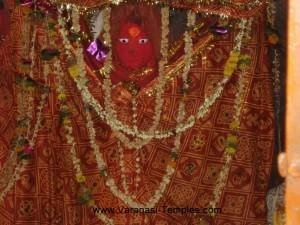
The deity, Sowbhagya Gauri, is depicted as a Murti of black stone, representing the goddess in a serene, benevolent posture. The sanctum is enclosed by a Mandapa where devotees can sit for meditation. The walls of the temple complex, located within the Adi Vishwanath premise, feature intricate carvings common to the Nagara style, though the overall layout reflects the compact, high-walled structure characteristic of temples along the Ganga ghats. The proximity to the Kashi Vishwanath Corridor ensures that the architecture is maintained to a high standard, with white marble paving and modern amenities integrated respectfully.
Darshan & Ritual Logistics
Darshan at Sowbhagya Gauri is intimate and spiritually charged. While the temple is open throughout the day, specific hours are designated for rituals.
Daily Timings
| Session | Timings | Rituals |
|---|---|---|
| Morning Darshan | 05:00 AM – 12:00 PM | Mangala Aarti, Shringar Darshan |
| Afternoon Break | 12:00 PM – 3:00 PM | Sanctum Cleaning |
| Evening Darshan | 3:00 PM – 11:00 PM | Bhog Aarti, Shayan Aarti |
Key Sevas & Online Booking
Devotees can book the following Sevas. As of 2026, bookings are managed digitally via the Kashi Vishwanath Temple official app.
- Gauri Abhishekam: Performed on Tuesdays and Fridays. Requires prior booking 48 hours in advance.
- Shringar Puja: Offered to Sowbhagya Gauri on Sunday mornings.
- Navratri Special Archana: Available daily during Chaitra and Shardiya Navratri.
Visit the official Shri Kashi Vishwanath Temple website for the “Kashi Vishwanath App” to book these services.
2026 Festival Calendar
- Chaitra Navratri: March 30 – April 7, 2026 (Peak day for Gauri Yatra).
- Shardiya Navratri: October 2 – October 10, 2026.
- Diwali: October 18, 2026 (Maha Lakshmi Puja at the temple).
- Dev Deepawali: November 4, 2026 (The day after Kartik Purnima).
Practical Visitor Guidance
The Sowbhagya Gauri temple is located inside the Kashi Vishwanath Corridor, which has strict security protocols.
Dress Code & Etiquette
- Attire: Modest, traditional clothing is preferred (Kurta-Pajama for men, Saree/Salwar Kameez for women). Western casuals like shorts are restricted.
- Photography: Strictly prohibited inside the inner sanctum. Photography is allowed in the outer mandapas and corridors.
- Electronics: Mobile phones, cameras, and leather items must be deposited at the free locker facilities provided at the security checkpoints of the Corridor.
Crowd Management & Best Time to Visit
The Kashi Vishwanath Corridor receives an average of 50,000 visitors daily.
- Best Hours: Early morning (4:00 AM – 6:00 AM) or late evening (10:00 PM – 11:00 PM).
- Seasonal Advice: Summers in Varanasi (May-June) are extreme. Carry a water bottle (provided water is safe) and wear cotton fabrics. Winters (Dec-Jan) are pleasant but foggy; early morning visits require warm layers.
Pilgrimage Connectivity
How to Reach
- Nearest Airport: Lal Bahadur Shastri International Airport (VNS), approximately 25 km away. Pre-paid taxi services are available to the Corridor.
- Nearest Railway Station: Varanasi Junction (BSB), 7 km away. Auto-rickshaws and e-rickshaws connect the station to the Corridor entry points.
- By Road: The temple is accessible via the Varanasi-Allahabad Highway (NH 19). The Corridor has designated drop-off points for pilgrims.
Nearby Sacred Sites (Pilgrimage Circuit)
- Kashi Vishwanath Temple: Located immediately adjacent; essential to visit after Sowbhagya Gauri.
- Annapurna Temple: Located just a short walk away; dedicated to the Goddess of Food.
- Mrityunjaya Mahadev Temple: A historic Shiva temple located near the Scindia Ghat, known for granting longevity.
Photo Gallery
Frequently Asked Questions (FAQ)
1. Is there a VIP darshan entry for Sowbhagya Gauri?
Yes, the Kashi Vishwanath Corridor offers a Priority Darshan ticket (approx. ₹300) which allows devotees to bypass the general queue. This ticket covers darshan of the main Vishwanath temple and all surrounding shrines, including Sowbhagya Gauri.
2. Can I carry Prasad inside the temple?
Outside food items are generally not allowed inside the Corridor. However, you can purchase Prasad from the official counters inside the Corridor complex, which includes Belpatra, Dhatura, and sweets dedicated to Maa Gauri.
3. What is the significance of the Gyan Vapi?
The Gyan Vapi (Well of Knowledge) is believed to hold the original Jyotirlinga of Vishwanath and the Sowbhagya Gauri idol protected inside. Devotees perform rituals near the well to cleanse their sins and gain spiritual knowledge.
4. Is the temple accessible for senior citizens?
Yes. The Kashi Vishwanath Corridor is wheelchair accessible. Electric buggies are available at the entry gates to assist senior citizens and divyang (differently-abled) devotees up to the temple entrance.
5. What are the contact details for temple administration?
For inquiries regarding Seva or donations, one can contact the Shri Kashi Vishwanath Temple Management Committee via their official website or the dedicated helpline available at the Corridor information desks. Specific phone numbers for minor shrines are often not listed separately.
Recent Posts

Shri Kaamkoteeshwar Mandir, Varanasi – History & Significance
In the heart of Kashi, the eternal city of Lord Shiva, where the Ganges flows with celestial grace, stands the Shri Kaamkoteeshwar Mandir. This sacred Sannidhi is not merely a temple but a profound spiritual bridge between the Northern…

ओ सांवरे तूने ही मुझको संभाला – Lyrics & Meaning
ओ सांवरे तूने ही मुझको संभाला – A Prayer to Shyam Origin & Spiritual Essence Why This Bhajan Resonates Devotees chant this when overwhelmed by life’s storms—the refrain ‘तूने ही मुझको संभाला’ is the soul’s sigh of relief: “You…

कथा ये है महाराज मेरे की – Lyrics & Meaning
कथा ये है महाराज मेरे की छत्रपति संभाजी महाराज – A Prayer to Chhatrapati Sambhaji Maharaj Origin & Spiritual Essence Why This Bhajan Resonates Devotees chant this when their spirit feels tested—its powerful refrain “महाराज मेरे” is a soul’s…

Rigveda Samhita Yathartha Anuvada (ऋग्वेद संहिता यथार्थ अनुवाद) – Complete Set with Anvayartha & Hindi/English Translation
The Rigveda is the oldest surviving scripture of humanity and the foundational text of Sanātana Dharma. For serious students, scholars, UPSC aspirants studying ancient Indian history, Sanskrit learners, and spiritual seekers, a precise and grammatically structured translation is indispensable.…

आना भी अकेला है जाना भी अकेला है – Lyrics & Meaning | BharatTemples
आना भी अकेला है जाना भी अकेला है – A Prayer to the Divine Witness Origin & Spiritual Essence Why This Bhajan Resonates Devotees turn to this bhajan in moments of deep reflection—when life’s attachments begin to ache. The…

माता शेरावाली के द्वार जो भी जाता है – Lyrics & Meaning
माता शेरावाली के द्वार जो भी जाता है – A Prayer to Maa Sherawali Origin & Spiritual Essence Why This Bhajan Resonates Devotees turn to this bhajan in times of fear or uncertainty—its promise that no one leaves Maa’s…

मार लेना सपणी उबार लेणा भवरा – Lyrics & Meaning
मार लेना सपणी उबार लेणा भवरा – A Prayer to the Divine Beloved Origin & Spiritual Essence Why This Bhajan Resonates Devotees chant this in moments of deep vulnerability—its cry of “मार लेना सपणी, उबार लेणा भवरा” is the…

हमें श्याम सुंदर भरोसा तुम्हारा – Lyrics & Meaning
हमें श्याम सुंदर भरोसा तुम्हारा – A Prayer to Shyam Sundar Origin & Spiritual Essence Why This Bhajan Resonates Devotees chant this when feeling alone—its refrain ‘de do sahara’ is the soul’s cry for divine support. Lyrics in Hindi…

Mere Satguru Ne Di Thi Davai Lyrics in Hindi & Meaning
Mere Satguru Ne Di Thi Davai: Invoking the Guru’s Liberating Wisdom This soul-stirring bhajan venerates the Satguru (True Spiritual Master) as the divine physician who dispenses the only remedy for life’s deepest sufferings. Composed by Sant Karmaveer Tufani, it…

Janm Diyo Thari Maa Dukh Dekhiyo Lyrics in Hindi & Meaning
जन्म दियो थारी माँ दुख देखियो (Maa’s Grief Upon Birthing You) This soul-stirring Chetavani Bhajan (admonitory hymn) is addressed to the Divine Mother (Maa) – a call for repentance when children forget their filial duties in the dark age…